The Monster Manual is chock-full of creatures that can add a much-needed challenge in Dungeons & Dragons, but some often get passed over in favor of higher CR (Challenge Rating) monsters. Whilst a higher CR can indeed make for a much tougher, single individual foe, The Monster Manual has no shortage of creatures that multiply, deceive, evade, and more, to provide a deceptively tough fight.

The Strongest Boss Monsters In Dungeons & Dragons, Ranked
Dungeons & Dragons is plenty challenging, but these boss monsters make things tough for even the most experienced players.
For your next session, here are 10 D&D monsters that you can use to provide a new kind of challenge for your players. It might not be as cinematic as fighting an Adult Red Dragon, but encounters with these monsters are a breeding ground for creative solutions and team-working opportunities.
Who’s That Character?

Identify the silhouettes before time runs out.
Identify the silhouettes before time runs out.
Easy (7.5s)Medium (5.0s)Hard (2.5s)Permadeath (2.5s)
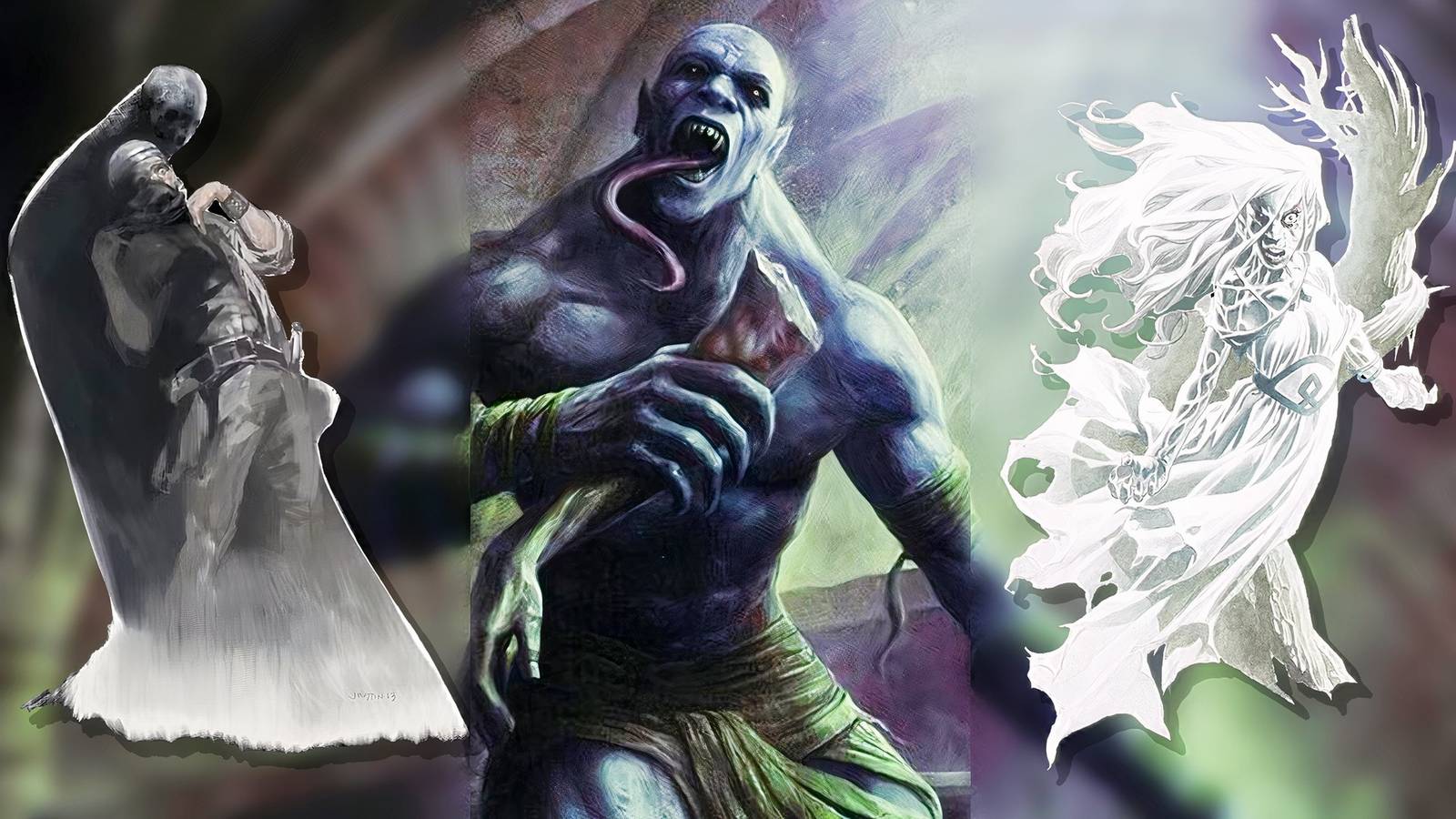
Intellect DevourersIntellect Devourers
These creatures can melt their target’s mind, crippling them in combat

Intellect Devourers featured prominently in Baldur’s Gate 3, and for good reason! They provide an early-game challenge that can still offer real stakes for players. Not only do they come armed with resistance against bludgeoning, piercing, and slashing damage from nonmagical weapons, but they also have the Devour Intellect action, which allows them to force a target to make a DC 12 Intelligence saving throw. On a failure, there’s a chance the target will have their intelligence score reduced to 0, stunning their target.
What’s more, they can target an already incapacitated humanoid and start an INT contest, and should the player fail, their character’s body is taken over by the Intellect Devourer. Characters who suffer this fate are at risk of death, even if the creature is removed. This can be absolutely devastating for INT-based characters, like Wizards or Artificers, and can render a player useless very early on. These creatures provide a great opportunity to lull your players into a false sense of security. After they dispatch a few of these quite easily, they won’t be expecting one to melt the mind of a player character so suddenly.
Ghouls
Elves or Undead are the only creatures escaping the Ghoul’s paralyzing claws

Boasting extremely similar stats to the Intellect Devourer, Ghouls are fearsome in their own right, especially for a creature with a challenge rating of 1. Whilst their attacks, Bite and Claws, do a pretty meager 2d6+2 and 2d4+2 respectively, the claws provide an opportunity to completely paralyze their target, meaning it can take a character out of a fight in a single turn.
Their Claws attack forces the target, save for undead or Elves, to make a DC 10 Constitution saving throw. Whilst tank and other melee characters might be more likely to pass this check, at lower levels, this can be absolutely devastating, especially if it’s something the players won’t have encountered before. This can be a valuable opportunity for them to learn ways to handle paralysis, or other status conditions whilst in combat.

Dungeons & Dragons: 18 Broken Character Builds
Dungeons & Dragons allow players to make characters however they see fit, but these builds are downright broken.
Even if players can handle one or two Ghouls with ease, they can become overwhelming very quickly if players are forced to spend their turns rolling to save against paralysis, rather than dishing out damage.
Banshees
There’s no avoiding Banshees, nor their debilitating Wail

The Banshees possess a few abilities that make them particularly formidable, even for higher-level parties. A trio of Banshees can provide a truly testing encounter for a party of four level 7 characters. With 58 hit points, there’s no guarantee they can be dealt with quickly.
Additionally, their Detect Life ability allows them to sense any creatures in their presence (except constructs or undead) up to a whopping 5 miles away. This ability does not quite provide the Banshee with an exact location, but it renders running from them a futile effort. Their 40ft of movement speed also makes them faster than the average player, meaning a quick escape might not be on the cards during an encounter with a Banshee.
Their true power lies in their Wail ability, which they can only do once per day, which can immediately wipe out the hit points of any character that fails the DC 13 Constitution saving throw. Even if a player manages to save against Wail, they will still take 3d6 (up to 18!) HP of psychic damage.
Without some sort of support character to remedy the terrifying effects of the Banshee’s wail, a party may find itself in real peril. They are rated at CR 4, but it’s hard to avoid pondering if their ability to, potentially, wipe out a party in one move means they ought to be bumped up a little bit.
Mimic
From chests to wardrobes, even entire rooms, Mimics can perfectly replicate any object and trap their enemies

One of the most iconic creatures from Dungeons & Dragons lore, one that has made many appearances in other media, Mimics are renowned for cropping up when it’s least expected, oftentimes shattering dreams of hard-fought spoils of war or an endless bounty of gold coins. One may be forgiven for thinking such an iconic fixture of D&D may be just a novelty, but Mimics can create some sticky situations… Their adhesive ability (which they can only use when disguised as another object) sticks the creature to anything that touches it, grappling them.
This means a player must roll a contested strength (athletics) or dexterity (acrobatics) check against the Mimic to either prevent or break free from their adhesive. Ability checks to escape the grapple will have disadvantage, too, making the Mimic an even trickier foe to tangle with.
Anyone stuck in the Mimic’s grasp will also suffer on the melee front, as the Mimic has advantage on attack rolls against any creature it has successfully grappled. This creature, despite its CR of 2 and an armor class of just 12, can tear through front-line defenses of even the most well-rounded groups.
Gas Spore
Armed with fatal Death Bursts, Gas Spores can end enemies, with only a slim window to recover

One of the lesser-known creatures from Dungeons & Dragons, the Gas Spore can be a deadly enemy to face, despite a definitively unthreatening challenge rating of just ½. Their basic attack, Touch, has a +0 bonus to hit and deals a measly 1 damage, and with just a single hit point, it might be unclear why these creatures make this list.
Their Death Burst more than makes up for their otherwise embarrassing stats. This activity is activated when the creature drops to zero hit points. The spore explodes, and forces every creature within 20 feet to make a DC 15 Constitution saving throw. Not only do they take a healthy 3d6 of damage, but any players that fail the save will also become infected.
An infected creature will then die a specific number of hours, equal to 1d12 + the target’s constitution score. As the disease progresses, the target will become more and more ill. The spores will spread upon the death of the host, too, with their corpse sprouting several gas spores that later grow to maturity. Of course, players can remedy this disease, but there’s no guarantee that they’ll be able to find a cure in time, especially if they encounter these creatures in their natural habitat, the Underdark.
Animated Armor
These suits can knock players out cold for a whole fight, with one spell save

Animated Armor is definitely one of the most iconic D&D creatures, and with a challenge rating of just one, it’s an easy one to overlook when planning encounters. This creature boasts a wide range of immunities, particularly condition ones. As a construct, it is immune to being blinded, charmed, deafened, exhausted, frightened, paralyzed, petrified, or poisoned. Their sky-high AC also makes them a tough enemy to crack, as even seasoned characters may struggle to regularly roll well enough to deliver consistent damage to these haunted constructs.

Dungeons & Dragons: 23 Best Cantrips In 5e
Spellcasters have access to all kinds of cantrips. Some stand out as the best, so here’s what magically inclined adventurers should prioritize.
Their multiattack action allows them to make multiple weapon attacks in a single turn; although, luckily for players, it possesses no offensive capabilities beyond this. Additionally, unlike other D&D monsters on this list, they have a few key weaknesses that players can exploit, with them unable to function in an antimagic field or when targeted by dispel magic. Their blindsight range of 60 feet also acts as a hard limit, meaning they are unable to see anything beyond 60 feet away.
This one is definitely more of an early game creature, but a few Animated Armor sitting in a Lord’s manor is sure to make players think twice when exploring new spaces, should they survive their first encounter.
Nilbog
Magical creatures that avoid damage and even heal themselves with a reaction

Nilbogs are splinters of a trickster deity who is resigned to possessing Goblins, causing strife amongst Goblin populations. Despite a very low pool of HP, they can avoid taking damage at all. With their Nilbogism ability, any creature trying to damage them needs to pass a DC 12 Charisma saving throw, or they are charmed by the Nilbog until the end of their next turn. They will then spend their action praising the Nilbog, rather than attacking.
If anyone does manage to pass the check and damage the Nilbog, they can still use a reaction, Reversal of Fortune, to reduce the damage to zero and instead regain 1d6 hit points. This ability makes them a tricky enemy to fight, meaning they are best taken out in a single hit. Of course, with just 7 hit points, this should prove easy at higher levels, but for any party encountering this creature for the first time, they’re bound to be caught off guard by the tricky nature of these odd creatures.
Shadow
Excels in darkness, resistant to a smorgasbord of damage types, and able to eliminate melee characters with ease

The unassuming stats of the Shadow don’t do justice to how tricky these creatures can be to put down. They are not only resistant to acid, cold, fire, lightning, thunder, bludgeoning, piercing, and slashing damage, but they are also immune to necrotic and poison damage. They cannot be exhausted, frightened, grappled, paralyzed, petrified, poisoned, knocked over, or restrained.
They are at their best when working under the cover of darkness, but even darkvision will not prevent these creatures from using their Shadow Stealth ability, which allows them to take the hide action as a bonus action when in dim light or darkness.
Their strength drain attack dishes out a chunk of necrotic damage, 2d6+2, and reduces the target’s strength by 1d4, meaning it can quickly render primary damage dealers useless. If a Shadow reduces a creature’s strength to 0, the creature dies, and eventually, a new shadow will be born out of their death.
Magic users, especially those who made strength their dump stat, will no doubt struggle against enemies like a Shadow, though their statistics don’t quite paint the picture of how formidable they can truly be.
- Franchise
-
Dungeons & Dragons
- Original Release Date
-
1974
- Designer
-
E. Gary Gygax, Dave Arneson
