The gaming industry is quickly evolving, and a game that looks impressive today might look blurry or feel clunky in just five years. But then, there are some games that manage to survive this constant cycle of change. These are the titles that remain popular and relevant decades after their original release dates.

10 Perfect PlayStation Games Nobody Remembers
Uncover the hidden classics of PlayStation’s past, long forgotten by gamers but more than deserving of a spot in your gaming library.
Some may argue that no game is truly perfect, but if there are any games that come close to perfection, it’s these ones. Despite the fact that some of the games are more than 30 years old, they do not seem outdated in any way. And are just as exciting as they were when they were released. So, regardless of how much technology changes in the future, these titles will always remain relevant.
Tetris
Fit Falling Blocks Together Perfectly
- This game uses a simple loop of organizing shapes into lines to satisfy a basic human desire for order.
- Because it lacks a story and realistic graphics, the experience remains identical on any device from 1984 to today.
Tetris is a puzzle game that feels like a universal language because everyone loves and understands it. Its core idea is simple: players have to organize falling shapes called tetriminos into full lines. When a player completes a line, it vanishes, and they earn points. This loop is based on a psychological need for order and completion, which is why it remains addictive across all cultures.
With clear rules and fast feedback, it appealed to all ages. There is no fixed ending in classic Tetris. Players simply try to last as long as possible and score high before their screen fills with blocks. The simplicity of rotating and placing shapes turned into a surprisingly deep mental challenge, one that players around the world returned to again and again.
Super Mario World
Platforming Adventure Across a Dinosaur Land
- Precise jumping and movement across handcrafted 2D levels filled with secrets.
- Exploration-driven design that rewards players for exploring the world.
Super Mario World quickly became one of the most influential 2D platformers of its era because the developers took everything that worked in earlier Mario games and expanded it with larger levels, multiple pathways, secrets, and the introduction of Yoshi, an on-screen companion that altered movement and strategy.
Super Mario World’s world map gave players a sense of adventure rather than just a linear set of stages. Players could choose different routes, find hidden exits, and explore backwards and forwards through the game’s regions. This gave the game replay value far beyond the typical 2D platformer of its time.
Portal 2
Solving Physics-Based Puzzles Inside a Test Facility
- Portal pushes for creative problem-solving
- The story is delivered through environment, dialogue, and puzzle progression.
Portal 2 took the clever physics puzzle concept of the original Portal and expanded it into a broader, richer experience. Developed by Valve, it places players in a fictional lab where they use a portal gun to link spaces for creative problem-solving. Portal 2 adds new mechanics like gels that change movement and surfaces that react differently to portals, which deepen the puzzles without making them feel arbitrary or unfair.
What makes Portal 2 timeless is its flawless pacing and writing. The story is told through the environment and the dialogue of three main characters: the malevolent AI GLaDOS, the bumbling robot Wheatley, and the recorded voice of the facility’s founder, Cave Johnson. The humor is character-driven and not over-the-top, so it’s just as funny today as it was back in 2011.
Uncharted 2: Among Thieves
Blends Blockbuster Action With Realistic Character Chemistry
- Seamless blend of gameplay and blockbuster-style set pieces that still impress
- Strong pacing and character chemistry keep the adventure engaging from start to finish.
Uncharted 2 set a new bar for cinematic action games. Nathan Drake’s globetrotting adventure balances narrative, set-piece action, and character moments in a way that feels more like watching a blockbuster film than simply playing a game. And one of the best examples of this is the opening sequence involving a derailed train hanging over a cliff, a feat of technical engineering that still impresses today.
The perfection of Uncharted 2: Among Thieves lies in its balance. It masterfully alternates between high-intensity shootouts, quiet platforming sections, and character-driven moments. The chemistry between the cast, aided by the pioneering use of full-body motion capture and voice acting, made the characters feel more human than almost any other game of that period. Playing it today, the story doesn’t feel dated, and the gunplay is still as exciting as it was over a decade ago.
Half-Life 2
Reinventing the First-Person Shooter Through Physics and Pacing
- A physics-driven world powered by the Source Engine, where tools like the Gravity Gun turn the environment into part of combat.
- Carefully structured pacing that moves through varied locations, supported by facial animations and characters that create emotional investment.
Half-Life 2 arrived a decade after the original and immediately reset expectations for single-player shooters. It introduced the Source Engine, which featured a revolutionary physics system that allowed players to interact with almost every object in the world. The centerpiece of this system is the Gravity Gun, a tool that lets players pick up, throw, and manipulate environmental objects to solve puzzles or defeat enemies. This moved the FPS genre away from just pointing and shooting toward creative gunfight.

10 Classic Sci-Fi Games That Are Perfect From Start To Finish
From hundreds of choices, these classic sci-fi epics that remain perfect from beginning to end rose to the top.
The game’s pacing is probably one of its strongest features. It moves players from the oppressive, urban streets of City 17 to a terrifying, horror-filled town called Ravenholm, and then to a high-speed chase along a coast. Also, the facial animations of characters like Alyx Vance were so advanced for 2004 that they still look better and feel more human than many games released ten years later. And the emotional connection to the characters keeps players invested in the journey.
Chrono Trigger
A Time-Traveling Adventure to Prevent the End of the World
- A journey across multiple eras to stop the world-ending threat of Lavos.
- Branching choices and multiple endings that give players control over how the story unfolds and encourage replayability.
When a game assembles the creators of Final Fantasy and Dragon Quest, along with the artist behind Dragon Ball, it’s clear it’s something special. Chrono Trigger takes players on a journey through time, from ancient prehistory to a bleak future, with stops in the Middle Ages and other eras along the way. Players guide a young Crono, along with companions like Marle, Lucca, Frog, Ayla, and Robo, on a quest to stop a world-ending threat known as Lavos.
What helped Chrono Trigger stand apart when it released was its ability to make players feel in control of the story. Instead of a single fixed path, the choices players make during their adventure influence how events unfold and even determine which ending they reach. This design encouraged replaying the game across different decisions and outcomes, adding depth to the experience long after the first playthrough. So, it’s one of the JPRGs that have aged incredibly well.
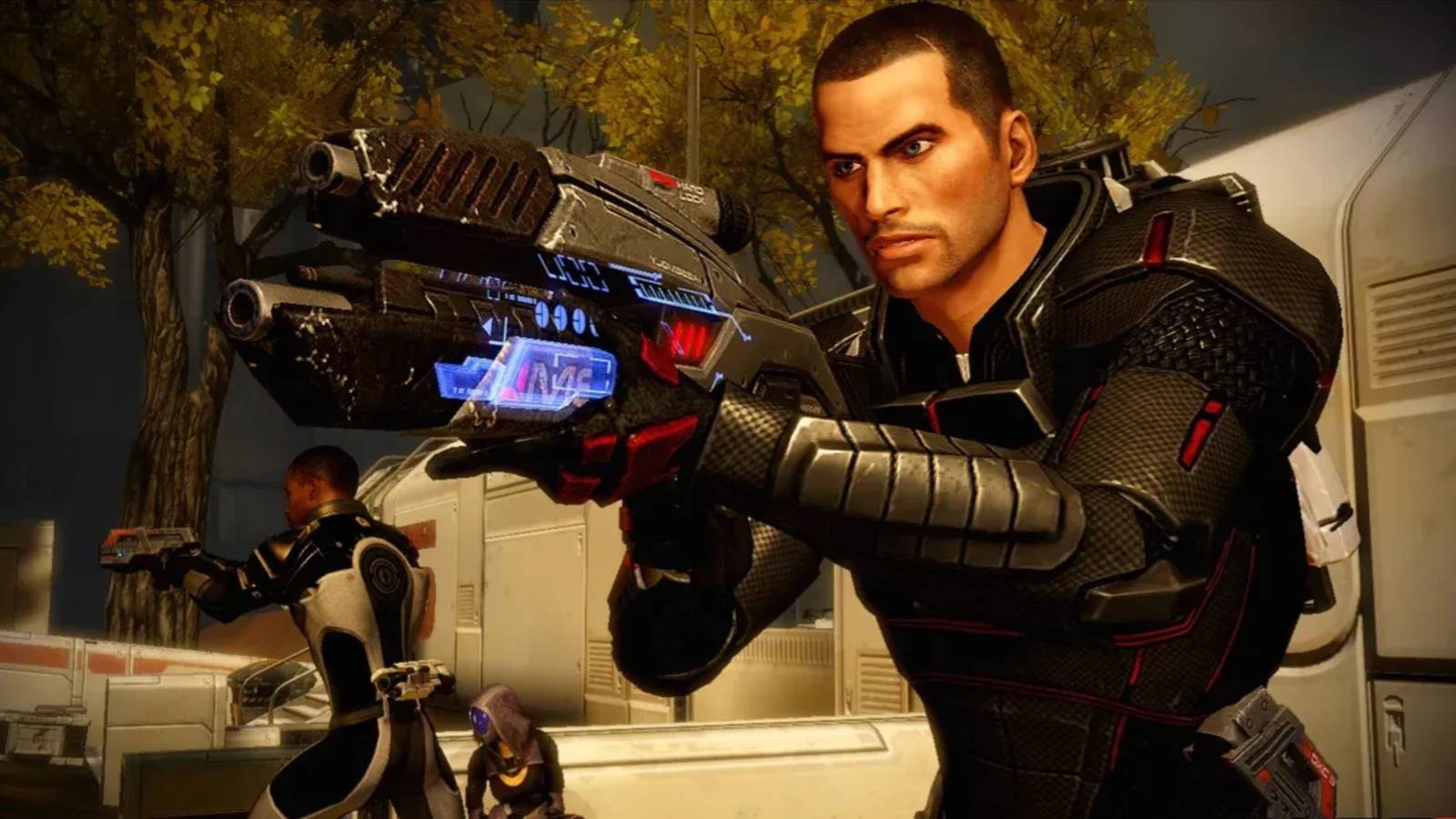
Mass Effect 2
Leading a Crew on a High-Risk Mission Across the Galaxy
- Squad-based combat paired with deep character-driven storytelling.
- Player decisions that affect relationships, survival, and the final mission
Mass Effect 2 is one of the best examples of how to merge high-stakes action with deep, emotional storytelling. The game basically wants players to build a team of specialists from many worlds and backgrounds, each with their own personalities, motivations, and loyalty missions. These stories unfold through deep conversations and branching choices, so players often feel personally invested in the crew’s successes and failures.
One of the best parts of the game is its final mission, or the suicide mission. In this sequence, choices made throughout the game, such as how well players are prepared and how strong bonds are with squad members, directly affect who survives. This approach made the climax feel personal and risky rather than scripted.
Provides Total Freedom Within A Massive Fantasy World Filled
- Open-ended exploration where players choose who they become.
- A world filled with quests, factions, and emergent stories.
The Elder Scrolls 5: Skyrim is easily one of the best open-world fantasy games ever, but the best part is the freedom it gives players. From the moment it begins, the game invites players to forge their own path: players may follow the main quest line to defeat the world-ending dragon Alduin, or ignore it entirely to craft a life as a merchant, a fighter, a mage, a thief, or all of these.

The 10 Most Perfect Games Released Since 2010, Ranked
It’s almost impossible to find serious flaws in these games that represent the pinnacle of gaming over the past 16 years.
The world is large, detailed, and filled with hidden stories, ancient ruins, random encounters, and quests that don’t demand players follow a strict path. Players can choose when and where to travel, and how their character grows by earning experience and mastering skills.
Fallout: New Vegas
Challenges Players With Tough Moral Choices In A Desert Wasteland
- The story places a courier between competing groups where there is no clear right or wrong side.
- Dense writing allows for many ways to finish quests by using speech, stealth, or specialized skills instead of just fighting.
Few games combine elements like moral choices and freedom as well as Fallout: New Vegas. It puts players in the shoes of a courier caught in the middle of political conflict among competing factions. Unlike other games where the good and bad choices are obvious, New Vegas is famous for its moral ambiguity.
Every faction has valid reasons for its actions and terrible flaws, forcing the player to think deeply about the future of the wasteland. The writing is incredibly dense, with almost every quest offering multiple ways to resolve it through speech, stealth, or combat.
Diablo 2
Perfected the Addictive Cycle of Combat and Character Progression in Action RPGs
- Fast combat and loot systems that keep players coming back for one more run.
- Character builds and replay value that defined the genre for years to come.
Diablo 2 is probably one of the most influential action RPGs ever. It’s built around a simple but addictive loop, where players have to kill monsters, get better loot, and grow stronger. In Diablo 2, players choose from character classes such as Amazon, Barbarian, Sorceress, and others.
The game is procedurally generated, so the maps and the items dropped by enemies are different every time players play. This creates a loot hunt that can keep players engaged for hours. Even after more than twenty years of its release, Diablo 2 remains one of the few classic games that fans just can’t seem to stop playing.

6 Classic Open-World Games That Are Perfect From Start To Finish
Before open worlds were bloated, these PS2-era classics delivered focused design and satisfying finales from start to finish.
