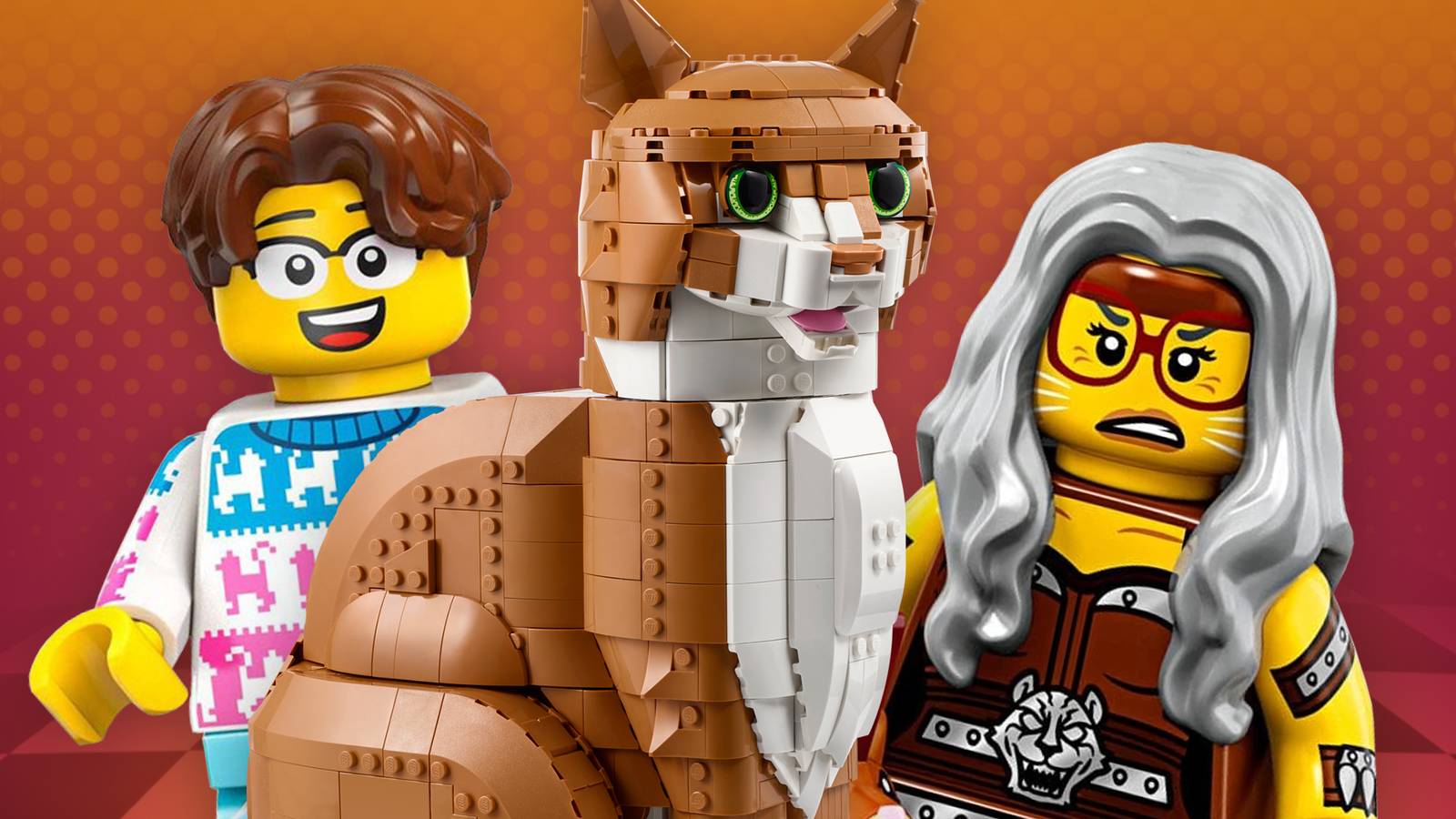
Lego No stranger to controversy, the company's latest animal-themed release has sparked a surprisingly intense debate within its global fan community. The recently revealed LEGO Orange Cat set, positioned as a companion piece to the popular LEGO Tuxedo Cat, has quickly become one of the most polarizing LEGO releases in recent memory.
At first glance, the Orange Cat LEGO set seems to follow a perfect formula. It's a brick-built display model designed mostly for adult fans, it leans heavily on realism, and it's clearly aimed at pet lovers rather than traditional game-focused builders. However, what initially seemed like a safe follow-up has ignited discussions about design reuse, color accuracy, and how effectively animal LEGO sets can represent their furry friends.

The 9 best LEGO sets for 2026 to introduce your little one to the hobby for the first time
LEGO is releasing several new sets in 2026, even after the big January wave, and many of the releases are perfect for introducing your child to bricks.
Lego's orange cat set has divided the fanbase, and the color may be the real culprit
A familiar build with minimal changes
One of the main points of contention is how closely the Orange Cat mirrors the previously released Tuxedo Cat Lego set, which became one of the best-selling Lego sets around. While LEGO hasn't marketed this as a simple repaint, many fans have noted that the underlying structure remains largely unchanged. That said, there are differences, even if they are subtle.
Key differences between the Orange Cat and Tuxedo Cat sets
-
Minor facial detail changes, including minor adjustments to eye contrast to suit lighter fur
-
The tuxedo cat set had a piece-swap option to keep the mouth open, while the orange cat set had a mouth opening piece.
-
Some of the pieces on the side of the orange cat set are slightly spiky to give the fur a more realistic feel, while the tuxedo cat set is “flatter” and rounder overall.
-
Reverse position of the tail, wrapping around the left side of the cat instead of the right side of the tuxedo cat set
-
The headpiece no longer rotates 360 degrees and now has a locking mechanism
Who is that character?

Identify the silhouettes before time runs out.
get started
Identify the silhouettes before time runs out.
Easy (7.5 seconds) Medium (5.0 seconds) Hard (2.5 seconds) Permadeath (2.5 seconds)
Despite these tweaks, critics argue that the overall silhouette, pose, and build feel are nearly identical, making the set feel less like a new model and more like a cosmetic variant, especially compared to other 2026 LEGO sets. This prompted some social media users to point out that for the cost of a set, you can simply adopt an orange cat from your local shelter.
Why the color choice for the Orange Cat set is more important than Lego expects
Interestingly, the biggest criticism is not about the recycled design, but about the distinctive shade of orange Lego. Unlike black and white, orange is not a universal shade in real-world cats. The shade used in the set is more bronze or cinnamon than orange, almost a red/brown shade, which only represents a relatively small subset of orange cats. Many real-life orange cats are:
-
Deep, dark ginger
-
Brighter and more saturated
-
Muted with gray or red undertones
-
Plain orange fur without white areas, or at least light orange instead of white
Technically, cats aren't “orange,” but the official definition is red.
As a result, some fans feel the set fails to capture the diversity typically associated with orange cats, making it difficult for owners to see their own pets reflected in the model. It doesn't help that Lego's adorable animal sets are pretty rare overall, so there's not much else to choose from within this category.
Why Tuxedo Cat completely ignored this problem
The Tuxedo Cat comparison is inevitable and perhaps revealing. Black and white is highly standardized, both in nature and LEGO's existing color palette. There is little ambiguity in what a tuxedo cat should look like, which allowed Lego to completely sidestep the issue of color accuracy. While there are many examples of different looking tuxedo cats, some with more white than black, others with more irregular patterns, and so on, the color palette is not up for debate.
With orange, the margin for error disappears. What worked flawlessly for a bichrome animal suddenly becomes very complicated when warmth, saturation, and realism come into play, especially for a Lego adult set aimed more at collectors.
Fans are divided
On the one hand, proponents argue:
-
The Lego set is beautiful, attractive and visually appealing
-
Lego never aimed for perfect realism
-
The model still functions as a decorative, style piece
-
Both the Orange Cat Set and the Tuxedo Cat Set can be combined to make a Calico Cat.
On the other hand, those dissatisfied with the set claim:
-
The orange shade feels flat and artificial
-
The design does not justify nearly identical reconstruction
-
LEGO missed an opportunity for modular color variations or pattern options
This divide highlights a broader issue facing LEGO growing up: adult fans expect both emotional resonance and design ambition, especially at premium price points. Ultimately, the LEGO Orange Cat set isn't a failure, but it's also not the slam dunk that its predecessor was. By leaning too heavily on an existing design and underestimating how individual color representation can be, LEGO may have overlooked what makes the Tuxedo Cat so universally appealing.
For some fans, it's a comfortable, cute performance model. For others, it's a reminder that when realism is the goal, details matter more than ever, and it's hard to buy this set for pet owners who feel the chosen shade of orange doesn't look like their furry friend's. At the same time, some social media users believe that a gray cat set works wonders, and even go for a tabby cat set, so there is clearly an audience for these “recolorers”. So, if you're wondering if the Orange Cat 2026 set is one of those Lego sets you shouldn't sleep on, the answer may lie in whether you're a good shade of orange, and you're not obsessed with recoloring.
