Fantasy novels have a serious amount of work to do before their stories can properly begin; they need to introduce unfamiliar worlds, establish an atmosphere, and compel readers to care about a story that could very well take place on an entirely different planet. However, some of fantasy’s greatest authors can accomplish this before the first paragraph is even over. With only a single sentence, some fantasy novels tease something compelling enough to make readers desperate to find out what’s next.
Of course, even some of the best fantasy books don’t necessarily begin with a standout line. Good Omens and A Game of Thrones, for example, contain extraordinary writing in their opening sections, but some of their most celebrated and iconic sentences aren’t at the very beginning. When looking at the first sentence of Chapter 1 of the US edition, some fantasy novels prove just how much an author can accomplish with only a handful of words.
8
Red Sister
By Mark Lawrence

Mark Lawrence doesn’t ease readers in to Red Sister, and instead begins with the unsettling observation that children rarely believe their lives could actually end, even when facing execution. It’s a brutally effective introduction to Nona Grey, a young girl with powerful abilities who faces immense danger. The opening line, “no child truly believes they will be hanged,” captures something immediately recognizable about her childhood innocence while also threatening to destroy it. Lawrence makes readers desperate to know why a child faces the gallows, which completely skips the need to include elaborate world-building or explanations about Red Sister’s magic systems.
No child truly believes they will be hanged.
Red Sister’s opening is even more immersive when readers consider the book’s famous prologue, which introduces the formidable Sister Thorn and the incredible lengths required to defeat a trained nun of Sweet Mercy. Together, Red Sister’s two beginnings establish the novel’s central contradiction: Nona is vulnerable enough to face execution but powerful enough to become something unstoppable. As Nona trains at the Convent of Sweet Mercy, the story gradually reveals how much power, violence, and loyalty are bound up in her future. It all kicks off with Lawrence’s opening line, which is one of the few that can make eight words feel exceptionally ominous.
7
Watership Down
By Richard Adams
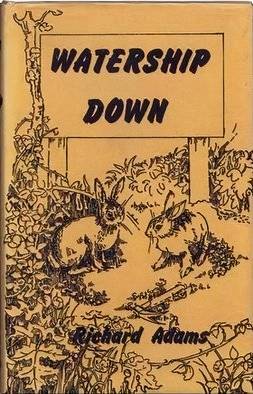
Four simple words are all Richard Adams needed to introduce the quiet melancholy atmosphere of Watership Down. On the surface, Adams’ opening line is a simple observation about changing seasons, but there’s something quite striking about its finality. It’s a wonderfully understated beginning for a novel in which an entire community of rabbits face the destruction of everything they’ve ever known. Rather than announcing danger with a dramatic warning, Watership Down’s opening line begins with the smallest possible reminder that nothing lasts forever.
That constant attention to nature is one of the reasons Watership Down is such a classic. When Fiver foresees danger approaching Sandleford Warren, his brother Hazel leads a group of rabbits into the unknown. Adams never forgets that his protagonists are rabbits, grounding their story in the landscapes and dangers of the English countryside. When readers finish Watership Down, they’ll realize the opening line is a very fitting start to a story about displacement, survival, and the cycle of life.
6
The Fifth Season
By N.K. Jemisin

Most fantasy novels begin by introducing their protagonists from a comfortable narrative distance, but N.K. Jemisin does the opposite in The Fifth Season, which addresses readers directly in the second person and places them inside Essun’s fractured perspective. The opening is deliberately unsettling, repeating the connection between “you” and “she” before finally identifying the woman at the center of the story. And then comes the devastating realization about her son. Readers barely have time to understand who Essun is before being confronted by the grief that’ll shape everything she does.
You are she. She is you. You are Essun. Remember? The woman whose son is dead.
The Fifth Season has another incredible beginning in its prologue, which opens by casually suggesting that the end of the world would be a good place to start. The contrast is brilliant for any fantasy reader: one opening establishes the enormous scale of the catastrophe unfolding across the Stillness, while the other focuses on the destruction of a single family’s world. As The Fifth Season develops, Jemisin’s unusual narrative choices become increasingly significant, making those initially disorienting sentences far more purposeful than they appear.
5
Hogfather
By Terry Pratchett

Only Terry Pratchett could begin a fantasy novel by questioning the very concept of beginnings. The first sentence of Hogfather is a great example of Pratchett’s comedy, because it sounds like a perfectly reasonable statement until the final few words undermine the entire idea. It’s also unmistakably Pratchett, whose Discworld novels regularly combine absurd humor with surprisingly thoughtful observations about philosophy, science, and human behavior. Before readers have even met a character, the opening line invites them to question something they probably took for granted.
Everything starts somewhere, although many physicists disagree.
That philosophical playfulness is particularly appropriate for Hogfather, which explores the importance of belief through the Discworld’s bizarre equivalent of Christmas. When the Hogfather disappears, Death takes on his responsibilities, complete with a red suit and a bewildered understanding of holiday traditions. Pratchett might start Hogfather with a physics joke, but the novel has something very profound to say about how people make sense of existence.
4
Harry Potter and the Sorcerer’s Stone
By J.K. Rowling

When you think about it, it’s quite cool that one of the most iconic fantasy book series of all time begins by introducing two characters who want absolutely nothing to do with fantasy. Vernon and Petunia Dursley are positively proud of their normality, and the slightly defensive “thank you very much” tells readers almost everything they need to know about their personalities. The sentence is funny, but it also does some efficient character work. Before Harry Potter or Hogwarts School of Witchcraft and Wizardry are even mentioned, The Sorcerer’s Stone introduces a household where anything out of the ordinary is treated like an embarrassment.
Mr. and Mrs. Dursley of number four, Privet Drive, were proud to say that they were perfectly normal, thank you very much.
The Dursleys’ obsession with being “normal” is only more ridiculous once the Wizarding World begins intruding on Privet Drive – owls appear in the daylight, letters come flying through the letterbox, and the Dursleys’ carefully maintained sense of respectability is threatened by events way out of their control. And beginning with the Dursleys makes Harry’s magical destiny all the more satisfying; readers experience the contrast between his miserable home life and the wonders of Hogwarts because The Sorcerer’s Stone showed exactly what he’s escaping.
3
The Last Unicorn
By Peter S. Beagle

The first line of Peter S. Beagle’s The Last Unicorn is heartbreaking, even if it’s your first time reading it. Beginning with a magical creature in what sounds like a beautiful forest feels like the beginning of a fairy tale, but the final four words introduce a sadness that only becomes more important as the story unfolds. The unicorn has spent countless years alone in the woods, unaware that the rest of her kind may have disappeared, and Beagle discusses her isolation before readers even know her story. It’s a very gentle beginning to The Last Unicorn, which is ultimately deceptive when the story becomes a profound meditation on love, loss, and mortality.
The unicorn lived in a lilac wood, and she lived all alone.
Her subsequent journey takes her beyond the safety of her forest and into a world where even the most magical of creatures can be misunderstood or sidelined. Beagle’s opening captures the heartache at the center of that adventure without revealing any of its major later developments. It’s a beautiful sentence on its own, and it becomes even more affecting when readers understand what the unicorn has to lose.
2
The Hobbit
By J.R.R. Tolkien

J.R.R. Tolkien could’ve opened The Hobbit with a grand description of Middle-earth, but he instead begins with a hole in the ground and a creature readers have never encountered before. The opening line is wonderfully matter-of-fact, treating the existence of hobbits as so ordinary that no explanation is yet needed. Naturally, that only makes readers more curious. Tolkien answers hobbit-related questions almost immediately, but the opening line has already accomplished its most important task: making an unfamiliar world feel lived-in.
In a hole in the ground there lived a hobbit.
The opening is also perfectly suited to Bilbo Baggins, whose comfortable life at Bag End is about to be disrupted by Gandalf. Bilbo isn’t looking for danger, obviously, and the cozy description of his home makes his hesitation more than understandable. Sure, Tolkien could’ve kicked things off with the epic mythology of Middle-earth, but he instead opts to introduce readers to someone who would much rather stay home and enjoy a second breakfast. It perfectly establishes the charm and character of his fantasy world.
1
The Gunslinger
By Stephen King

Stephen King’s opening to The Gunslinger feels like an entire story compressed into 12 words, because there’s no elaborate description of the setting, no introduction to the characters, and no attempt to explain why the pursuit is happening. Readers are instead presented with two mysterious figures and an apparently endless desert. But the opening line also encourages a series of questions: Who is the man in black? Why is he running? What makes the gunslinger so determined to follow him? It’s an economical beginning that establishes conflict, atmosphere, and momentum all at once.
The man in black fled across the desert, and the gunslinger followed.
The Gunslinger’s first sentence introduces Roland Deschain’s pursuit of the mysterious man in black, an obsession that forms the beginning of his much larger quest for the Dark Tower. It also perfectly captures the tonal identity of King’s epic, which draws as heavily from Westerns as it does from fantasy and horror. Roland’s relentless determination is apparent before readers even know his name, and the sentence becomes more meaningful as the series explores the consequences of his obsession. Other fantasy novels may have more beautiful prose, interesting ideas, or elaborate world-building, but few can match the immediate power of The Gunslinger’s opening line.
