Revenge movies offer audiences a particularly satisfying kind of catharsis: watching people who have inflicted terrible suffering finally face the consequences of their actions. Some deliver that satisfaction through brutal violence and stunning action sequences, while others take a more emotionally complicated route, focusing on grief, guilt, and the unlikely bonds that can emerge from tragedy. But the very best revenge films show audiences that revenge isn’t always as simple as getting even.
Revenge thrillers have been captivating audiences for decades, from the gritty vigilante movies of the 1970s to the stylish action franchises that dominate modern cinema. From dangerous contract killers to ordinary people-turned-vigilantes, these 10 epic revenge movies deliver the goods and keep audiences on the edge of their seats.
10
Man on Fire

Long before Denzel Washington became Robert McCall, the ultimate justice seeker, in The Equalizer trilogy, he played another hero called John Creasy in Man on Fire back in 2004. The former CIA operative battles with his own demons but takes a job protecting a young girl named Pita in Mexico City. Initially withdrawn and emotionally distant, Creasy gradually forms a genuine attachment to Pita, but after her family is murdered, she is kidnapped, and a rescue attempt ends in tragedy. As a result, Creasy embarks on a relentless mission against the people responsible, determined to find her and make them pay.
Directed by Tony Scott, Man on Fire is an incredibly effective revenge thriller full of genuine twists and impressive action sequences. Creasy has something meaningful to lose before he unleashes his fury, and he isn’t simply an invincible action hero dispensing justice. He’s a damaged man who begins to rediscover his humanity through his relationship with Pita, and Denzel Washington brings a simmering intensity to the role. In Man on Fire, revenge becomes an expression of love, grief, and an attempt at redemption.
9
Death Sentence

Nick Hume appears to live a comfortable life as an unassuming family man, until his eldest son is murdered during a violent encounter with a gang. Devastated by the loss, Hume identifies the killer, takes matters into his own hands, and turns into a vigilante, setting off a chain of retaliation that threatens to destroy the family he has left. His transformation from respectable suburban father into a revenge seeker is the driving force behind James Wan’s 2007 thriller.
Although Death Sentence received mixed reviews from critics and struggled at the box office, it deserves more credit as a bleak examination of how grief can become an obsession. Hume initially convinces himself that killing his son’s murderer will give him some measure of justice, but his actions only deepen the cycle of violence. Wan, who was establishing himself as one of the most sought-after filmmakers around after his breakout hit Saw, brings a horror director’s understanding of escalating dread to the story. Kevin Bacon’s increasingly desperate performance is also key in Death Sentence’s success: Nick’s a scared, grieving man whose actions become harder to defend with each new act of violence.
8
Road to Perdition

Sam Mendes followed his Oscar-winning masterpiece, American Beauty, with Road to Perdition, a visually striking gangster flick featuring Tom Hanks and Paul Newman. Set during the Great Depression, the film follows Michael Sullivan Sr. (Hanks), an enforcer for Irish mob boss John Rooney (Newman). Sullivan has spent years carrying out Rooney’s orders, but tragedy strikes when his wife and youngest son are murdered after his eldest son witnesses a death connected to the organization.
The father and son flee together, with Sullivan seeking vengeance as he tries to protect the only family he has left. Road to Perdition is so much more than a straightforward revenge thriller, with strong themes about fatherhood, guilt, and violence. Sullivan knows how to kill, but he cannot explain his life to his son or prevent Michael Jr. from witnessing the consequences of his work. His revenge mission then becomes inseparable from a far more painful question: whether he can give his son a future that isn’t shaped by violence. Daniel Craig and Jude Law add menace in supporting roles, and Thomas Newman’s haunting score reinforces the film’s bleak atmosphere.
7
Django Unchained

One of Quentin Tarantino’s best movies is the 2012 Western, Django Unchained, which follows the titular enslaved man freed by a German bounty hunter named Dr. King Schultz. The pair form an unlikely partnership, with Django helping Schultz track down wanted criminals in exchange for assistance rescuing Django’s wife from the brutal plantation owner Calvin Candie. What begins as a bounty-hunting mission quickly becomes far more dangerous, especially as Django is forced to confront the people and institutions that have kept him and his wife apart.
Django Unchained works as both a revenge Western and a confrontation of the horrors of American slavery. Tarantino’s trademark humor, stylized violence, and explosive action never overshadow the tragedies at its center, with the villains representing a disturbingly oppressive system that treats human beings as property. Django learns to navigate a world designed to deny him agency and uses that knowledge against his oppressors. Foxx gives a determined, increasingly confident performance in the lead role, while Waltz’s Oscar-winning performance gives Django Unchained much of its wit.
6
Taken

Liam Neeson’s foray into the action genre came as a surprise to audiences back in 2008, when he played retired CIA agent Bryan Mills in Taken. When Mills learns that his daughter was kidnapped by human traffickers while on vacation in Paris, the former agent immediately puts his unusual set of skills to use. Armed with little more than his training, determination, and a handful of initial clues, Mills sets off and races against time to find her. His investigation takes him into a criminal underworld, but he has zero intention of letting anyone stand between him and his daughter.
Bryan Mills gave Neeson a different kind of role: an aging, capable professional with a quiet menace that can even make a simple phone call feel threatening. And his single-mindedness makes Taken a very satisfying revenge thriller; Mills doesn’t spend long deliberating on what to do. He follows the trail, extracts information, and moves on to the next target. Fans were kinder to Taken than critics, and the film became a huge commercial success. Its influence can be felt in the wave of action thrillers that feature ordinary people caught up in dangerous situations, which unleash a dangerous protagonist.
5
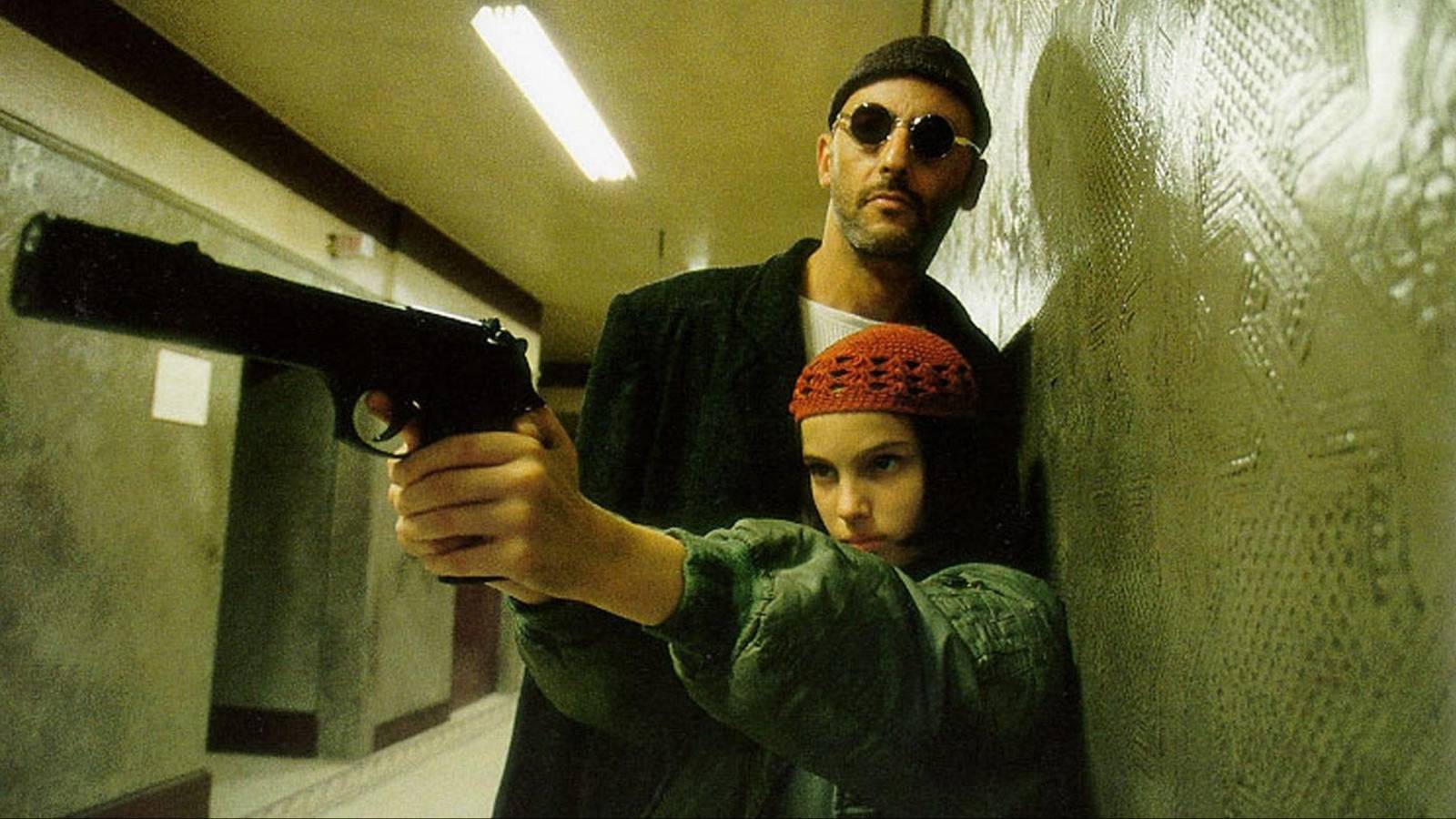
Léon: The Professional

Jean Reno played one of the most iconic contract killers ever in Luc Besson’s 1994 classic, Léon: The Professional. The titular character is a highly disciplined contract killer living a solitary life in New York. His carefully controlled routine is interrupted when corrupt federal agents murder an entire family in his building but accidentally leave a sole survivor: the 12-year-old Mathilda. With nowhere else to turn, Mathilda seeks shelter with Léon and asks him to teach her how to kill so she can avenge her family. Their uneasy arrangement develops into an unusual, but touching, relationship.
There are brutal kill scenes and high-octane action as revenge provides much of the early momentum. But at the center of Léon: The Professional are the stunning performances by Reno and Portman, playing two people who have been forced to grow up in vastly different circumstances. Gary Oldman is also memorable as the volatile Stansfield, and it’s one of the best performances in his varied career. The film’s portrait of revenge, grief, and dependency is a huge reason why audiences still love Léon: The Professional.
4
Kill Bill: The Whole Bloody Affair

Quentin Tarantino’s Kill Bill: The Whole Bloody Affair finally received its theatrical release in December 2025, with an epic runtime of over four hours. The story was initially in two parts, but Tarantino had reportedly always envisioned it as one big revenge thriller. Uma Thurman plays The Bride, a former assassin who wakes up from a coma after being attacked at her wedding rehearsal by her former colleagues in the Deadly Viper Assassination Squad. The attack was orchestrated by Bill, her former lover and the squad leader, and left her with a deeply personal reason to seek revenge. She sets out to find the people responsible, which all builds to her final confrontation with Bill.
The Whole Bloody Affair brings together a revenge saga that pulls from martial arts cinema, samurai films, Westerns, and exploitation movies. Tarantino turns The Bride’s revenge story into a stylish odyssey, complete with elaborate fight sequences, striking shifts in visuals, and a memorable soundtrack. There were rumors back in 2019 that Tarantino planned to make Kill Bill 3, but this looks increasingly unlikely with the legendary director retiring from the big screen after his upcoming 10th movie.
3
Oldboy

Park Chan-wook’s Oldboy begins with an ordinary man named Oh Dae-su mysteriously imprisoned in a room for 15 years, but he doesn’t know who has taken him or why. When he is suddenly released, he is given a short deadline to work out his captor’s identity and the reason for his confinement. It’s a disturbing deconstruction of the revenge genre, as he journeys through a carefully constructed web of manipulation, which forces him to question what he knows about his past and the people he encounters.
Oh Dae-su is seemingly pursuing the straightforward goal of finding the person responsible for ruining his life and making them pay. But his search for answers gradually becomes a form of psychological torture, and the closer he gets to the truth, the less satisfying the prospect of vengeance becomes. Park included numerous impressive action setpieces, with the famous hallway fight scene acting as an exhausting and desperate confrontation from a protagonist who’s driven by sheer survival. Oldboy’s devastating revelations also turn the revenge story into something far darker, leaving a lasting impression precisely because its pursuit of vengeance is far from comforting.
2
John Wick

Keanu Reeves was an established action star before his career-defining role as John Wick, thanks to his leading roles in Speed and The Matrix franchise. John Wick follows the titular character, a former assassin who has withdrawn from his criminal past to seek a quiet, unassuming life. After the death of his wife, John is left with a final gift from her: a puppy, intended to help him cope with his grief. When Russian gangsters break into his home, steal his car, and kill his dog, John returns to the life he left behind and sets out to get revenge. The puppy’s death has become one of the most iconic inciting incidents in cinema, and the critically acclaimed thriller spawned a franchise.
Once John begins his campaign, John Wick delivers distinctive gun-fu choreography, in which Keanu Reeves combines firearms with close-quarters combat. The success of the John Wick franchise has also led to spin-offs on the big screen and television with Ballerina and The Continental, respectively, but the original remains particularly effective because its simple, emotionally grounded premise gives all the elaborate action a clear purpose.
1
Death Wish

Michael Winner’s iconic 1974 hit Death Wish popularized the modern revenge sub-genre, becoming one of the defining vigilante films of its era. In it, Charles Bronson plays Paul Kersey, a mild-mannered architect in New York City whose world is shattered when criminals break into his home, murder his wife, and assault his daughter. Unable to continue believing in the authorities’ ability to deliver justice, Paul begins carrying a weapon and deliberately putting himself in situations where he can confront violent criminals. The premise is straightforward, but Death Wish delivers plenty of thrills, and it has spawned four sequels.
Bruce Willis starred in a remake of Death Wish in 2018, but it failed to compete with the original’s gritty atmosphere and moral ambiguity. The 1974 film invites audiences to understand Kersey’s anger while also showing just how easily his pursuit of justice can become wrong. It can be read as a fantasy of personal justice and a warning about what happens when individuals take matters into their own hands, and it’s an incredibly influential entry in the genre.

- Release Date
-
July 24, 1974
- Runtime
-
93 Minutes
- Director
-
Michael Winner
-

Charles Bronson
Paul Kersey
-
-
Vincent Gardenia
Frank Ochoa
-
