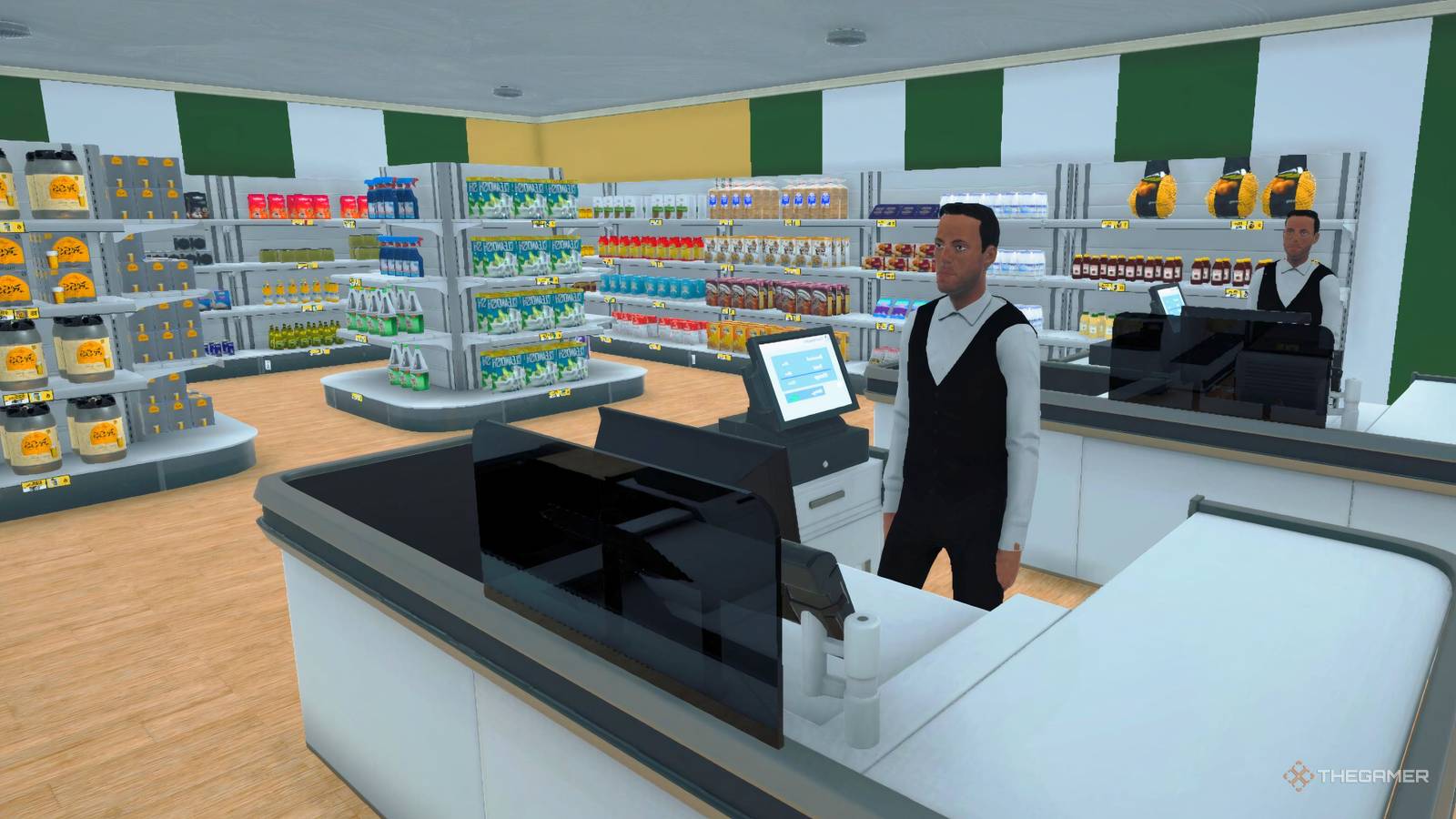
in Supermarket SimulatorA casual game focused on owning your own one-stop shop, you'll be in charge of all day-to-day operations. This includes placing orders, stocking shelves, and, most importantly, setting the right prices for the items you are selling so you can continue to do business.

Supermarket Simulator: 5 Beginner Tips
Keep your business thriving.
If the idea of setting prices seems daunting, don't worry. Supermarket Simulator includes a variety of real-life economics for you to use to your advantage. In this complete pricing guide, learn how to set prices in Supermarket Simulator without sacrificing the success of your business or the happiness of your customers.
Updated November 5th, 2025: Now that Supermarket Simulator is out of early access, we've updated this guide to account for all the latest features related to prices!
How to set your prices

The first thing you'll want to do after purchasing a new license is set the prices for all the items included in that license, and there are a few ways you can do this. The first way to set prices is by ordering items and then placing them on the shelves. When you do this, You'll see a price tag on the edge of the shelf that you can left-click to set the price..

In a small pop-up, you'll see the product's average cost, a custom price text box, an option to set a discount, and the current market price. To set your price, click the price text box And type what you want the purchase price to be. When you're done, sit down Press 'OK' at the bottom of the pop-upAnd your price is set.
While this is a simple enough way to set prices when you're only unlocking a few new products, it can get tricky as your inventory expands. Thankfully, however, there is another way to set prices that is much more efficient. Go to the computer, and you should see an option called 'Pricing'. with a dollar sign.
You do not want to sell products at a loss or at a price much higher than the market value, it is better for you Set your prices in the morning before you open the store for the day.
When you click on it, You will see a list of every licensed itemIncluding all pricing information. This includes cost, market price, when the market price last changed, whether the market price increased or decreased, and the option to set your price and discount.

Instead of remembering which items changed that day and then tracking them back to the store, it's an easy and clear way to see everything you have and what needs to be adjusted. Anything with A red indicator means that the market price has recently fallenAnd with some A green indicator means that the market price is currently rising. These are the prices you need to adjust for the day by typing in the text box under 'Price' for those items.
What is the best price to set

While playing through Supermarket Simulator, you will find that There are such things as “too high” or “too low”. When it comes to pricing your products. Too high and your customers will refuse to shop, but too low, and you won't make enough money to cover your expenses and keep doing business. overall, Both can pose a huge risk to your store's success.
It can be tempting to take out a loan when you're in a pinch, Debt can quickly turn things for the worse. If you're low on cash, it's probably a problem with your pricing, or you're ordering more inventory than you're selling. Try to address that problem directly.
With that in mind, you want to find the sweet spot for each item that will continue to make you a strong profit and bring in new customers. One of the best ways to do that is to evaluate the different prices associated with your products, which you can easily see whether you're setting prices on the shelf or on a computer.
How to evaluate cost and market value

When it comes to pricing your items, there are two main things to consider. The first is what you paid for the product, and the second is what the market value of the product is.
Since you can't buy products one at a time, you're technically always buying in bulk, but that's not a problem as long as you're selling most of what you have on the shelves. it said, The cost listed on the item when setting the price is the cost of an individual unitNot the wholesale price you pay.
Every time you stock a new item, If you don't set a price, it will automatically be set to the purchase price of that object. It won't make you any profit, but it won't result in negative income either. Similarly, the game will warn you that a product is being sold without a set price, but it doesn't prevent this from happening either.
Because you obviously don't want to break, You want to stay well above the cost of the item. With this in mind, you should now look at the market price, which is the bouncing number under the discount option on the little shelf pop-up and the price listed under 'market price' on the computer.

In real life, the Market price is the average of what competitors are charging. While you don't have much to do with your competitors in Supermarket Simulator, you can still see the market price and want to account for it. If you list products much higher than the market price, your customers will complain And just shop elsewhere, meaning you won't make any money.
For starters, One of the safest options for pricing is to set your prices a few cents below market value. This ensures that customers don't feel your prices are too high, and you'll still make a steady profit. As a general rule, you should aim Price your items around $0.20 above the market price.
If you find that inventory isn't moving as quickly as you'd like, you can even set prices below market value and still make a profit.
That said, you are also free Experiment with pricing until you find something that works For you and your customers. As long as you don't exceed market value by a large amount, most customers will still be happy with their purchases. The most important thing to do after setting your initial price is to watch the market.
When to change your prices

Just like in real life, you'll find that your prices won't stay the same after you initially set them. Sometimes, the market price will changeBe it through increases or decreases, and you want to adjust your price to match it.
You don't need to increase your initial price if the market price rises, however It is mandatory to reduce your price on the commodity that has decreased in market value If you want people to continue shopping.
Supermarket Simulator will let you know which items have seen market price fluctuations that dayBut the easiest way to evaluate it is on a computer. Under the 'Pricing' tab, anything with a red indicator should be priced down, and anything with a green indicator should be priced up.
As mentioned above, Pricing your items just below market value can often be a safer optionEspecially for beginners. However, this may not always be sustainable. As you expand your business, you'll want to change your prices in response to your customers, supply and demand, and current rates. Finding the best prices for your items is ultimately based on usage.

Supermarket Simulator: How to hire more employees
Here's how to hire more employees in Supermarket Simulator.
