Key takeaways
- Starfleet Intelligence spies on threats, including foreign governments and rogue Starfleet members. Works with oversight from Starfleet Command.
- Section 31 is a black ops branch that handles dirty jobs Starfleet can't do openly.
- Section 31 began as part of Starfleet Intelligence, but became a rogue organization in the 24th century. Illustrates the risk of black ops with no oversight.
when Star Trek When fans think of Starfleet, they think of Starfleet officers aboard starships, the staff and students of Starfleet Academy, and the commodores, admirals, and administrative staff who work at Starfleet Headquarters. While people in those roles make up the vast majority of Starfleet personnel, there are other divisions of Starfleet that Star Trek Fans see very little. Two of those divisions are Starfleet Intelligence and Section 31, which began as a subdivision of Starfleet Intelligence.
In the 23rd century, Section 31 was still a subdivision of Starfleet Intelligence, which still had oversight of Section 31's activities. However, Section 31 operatives often took more liberties with those missions than Starfleet Intelligence liked, which led to problems. By the 24th century, Section 31 had its own operations.

related to
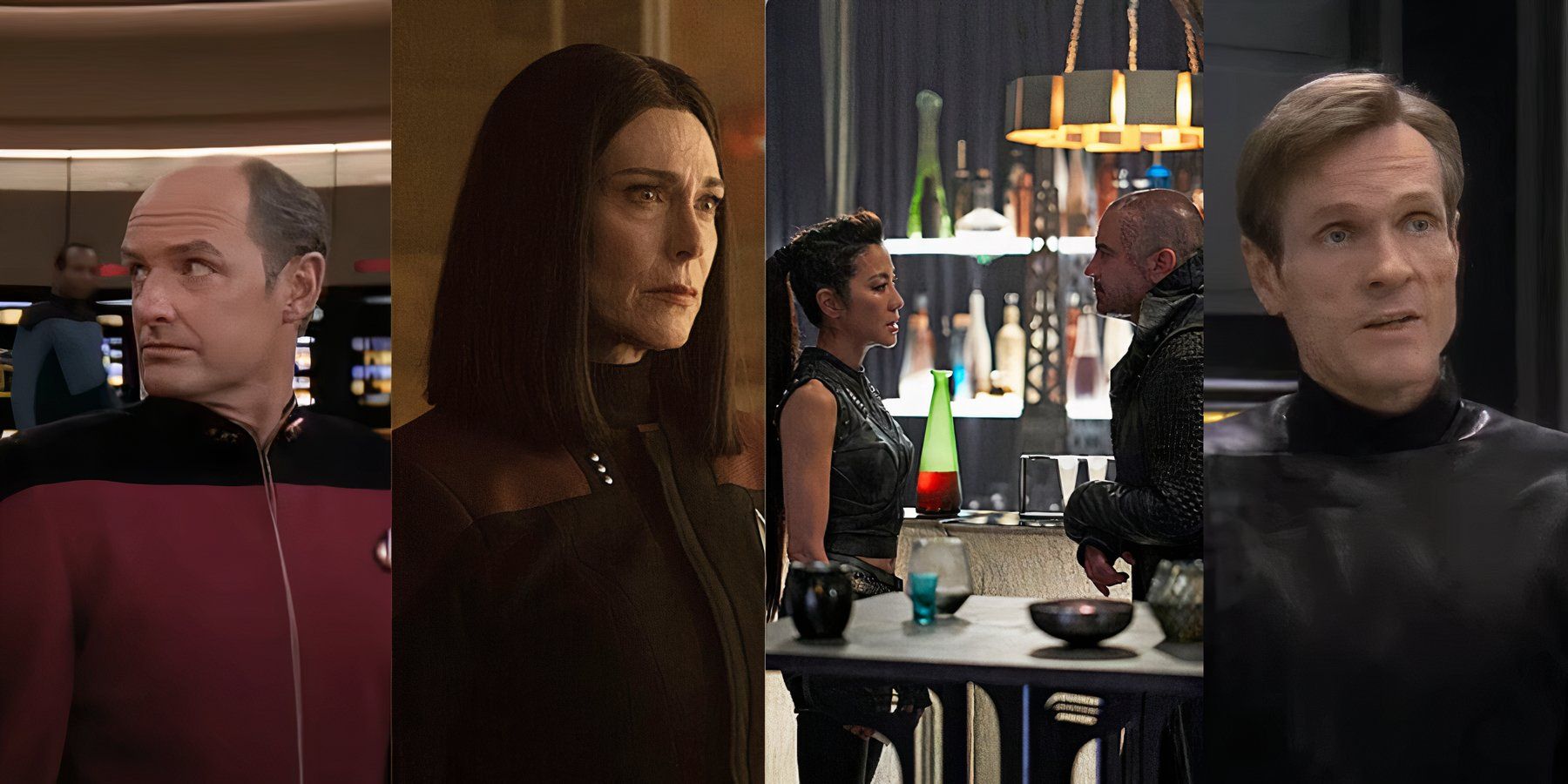
Which Major 'Star Trek' Characters Worked in Section 31?
Section 31, Starfleet's Black Ops branch, has always been hidden behind the scenes. Here are some familiar faces who have worked for the organization.
The frequent overlap between the duties and missions of Starfleet Intelligence and Section 31 makes it easy to confuse the two. Here are the major differences between the organizations, and how they function within Starfleet.
Starfleet Intelligence: Espionage and planning

Like any other intelligence organization, Starfleet Intelligence's primary function is to gather information about threats to Starfleet, and beyond that, the United Federation of Planets. Their purpose is to report that information back to Starfleet command. Under ideal circumstances, Starfleet Intelligence reports to Starfleet Command and suggests appropriate actions based on the information, leaving Command to decide on a course of action. In extreme situations, Starfleet Intelligence officers can directly alert high-level Starfleet officers of imminent danger and work on a plan of action with little feedback from Starfleet Command.
Starfleet Intelligence's missions often involve gathering intelligence on the actions of foreign governments such as the Klingon Empire, Romulan Empire, and Dominion. However, Starfleet Intelligence also investigates suspected threats within Starfleet. An example is when the Founders took physical forms of high-ranking Starfleet officers on Earth. They also take on Starfleet officers who are as rogue as members of the Maquis.
On rare occasions, Starfleet Intelligence has engaged in cover-ups to protect the Federation's security. The most notable example is the mutiny aboard the Pegasus, which was cloaked because the ship was testing a top-secret cloaking device.
Starfleet Intelligence played a major role in the Dominion War. Intelligence officers from the Alpha and Gamma Quadrants gathered information about the Founders, the Vorta, the Jem'Hadar, the Cardassians, and other members of the Dominion. They watched the Romulans closely to determine whether to ally with the Dominion or the Federation.
Starfleet Intelligence handles work that Starfleet Command deems necessary for the security of Starfleet and the Federation. When Starfleet or the Federation needs to do something that isn't above board, or they don't want to answer too many questions about their actions, they call Section 31.
Section 31: Dirty work

The long-standing rationale for Section 31 is much the same as it is for any black ops organization. Sometimes, governing bodies need to do things to protect their people that they can't get away with doing in the open. When Starfleet Intelligence can't risk getting involved in a mission, or Starfleet needs to do something illegal, they have Section 31.
Most of Section 31's early activities in the 22nd and 23rd centuries had to do with efforts to stabilize the Klingon Empire. They were constantly embroiled in some form of civil war, and were always one step away from war with the Union. Relations with the Klingons were so precarious that Starfleet Intelligence could not risk sending agents into Klingon territory, even covertly.
But because the Klingons were a major threat to the Federation, Starfleet Intelligence still wanted to influence the direction of the Klingon Empire. So, they had Section 31 operatives embedded in the Klingon Empire. Meanwhile, they had personnel within Starfleet, such as Lt. Malcolm Reed aboard the Enterprise NX-01, carrying out missions to promote the stability of the Klingon Empire.
Members of Section 31 were also tasked with scientific missions that Starfleet could not afford to officially commit to, such as Project Daedalus. Led by Leland and Gabriel and Mike Burnham, the project focused on developing time travel technology after Section 31 discovered the Klingons were working on it. The project was so important to Starfleet and Federation security that Starfleet Intelligence tasked Section 31 with keeping it hidden from conventional inspection. In addition to the need for secrecy, the Federation knew that scientists working on the project would have to use unapproved methods to obtain the information and materials they needed.
During the Klingon War, Starfleet Intelligence relied on Section 31 to carry out intelligence and combat missions that they could not trace back to Starfleet. Unfortunately, the computer system used by Control, Section 31 to guide their decision-making became susceptible. It killed high-level operatives of Section 31 and took over the organization. After that failure, Section 31 underwent a serious overhaul and its activities were more closely monitored by Starfleet Intelligence.
By the 24th century, Section 31 had completely separated from Starfleet Intelligence. Luther Sloan, a Section 31 agent who during the Dominion War, Dr. Interrogates and tries to recruit Bashir, telling Bashir that Section 31 is its own organization. It reported to no one, was held accountable to no one, and its members felt the need to do what they had to do to ensure the safety of the confederation. When Captain Benjamin Sisko asked Starfleet Command about Section 31, they insisted that there was no black ops division of Starfleet Intelligence, and that the so-called Section 31 was a rogue organization.
Episode 31 depicts the tightrope black ops organizations walk, going from legitimate intelligence operations to rogue, unchecked secret societies. Without a structure of responsible monitoring and accountability, operatives who use stealth, stealth and evasion can easily become their own version of the law.

Star Trek
- Created by
- Gene Roddenberry
- First movie
- Star Trek: The Motion Picture
- The latest movie
- Beyond Star Trek
- First TV show
- Star Trek: The Original Series
- The latest TV show
- Star Trek: Strange New Worlds
- Year of creation
- Year 1966
