When I last previewed Yakuza Kiwami 3 and Dark Ties, I enjoyed my time with both games, but I left wary of how the fandom would react to some of the changes – most notably the character redesign of Rikiya Shimabukuro. Safe to say, they didn’t like it. After going hands on with both games again this past week, it’s clear that Yakuza Kiwami 3 is not just revisiting an old title, it’s reimagining it, and I’m okay with that.
In a pre-recorded message for the preview, producer and director Ryosuke Horii and chief producer Hiroyuki Sakamoto were very open about the changes to Yakuza Kiwami 3.
“Even though it’s a remake, we’ve added many new elements and even revised a part of the story, so it’s not a simple remake, but a fresh and innovative experience that feels like a brand new title,” Horii said. I’m sure that saying they’ve revised some of the storyline may ring alarm bells for some, as it did for me.

“Even from the very beginning, the opening is completely different from the original Yakuza 3,” Sakamoto added. “So even players who experienced the original will notice right away how much Yakuza Kiwami 3 has changed and evolved at the beginning to become much more enjoyable.”
“By the time you’re in Chapters 2 and 3, you’ll probably be thinking, ‘This is totally different’,” Horii said, and from what I’ve played, he’s not wrong. He also went on to explain that the team “were debating on how much we should change and how much of the original we should leave as is.” However, he claims there was “no point in just recreating the same thing,” which is why they approached it as if making a new game entirely.
It’s Not Just New Content, It’s Evolved Content

This week, I saw more of that change first hand. One of the new additions that the team is most confident in is the Life at Morning Glory content, Horii says. “In the original game, there were substories that let you interact with the children, but this time, we’ve expanded the theme into ‘education’, letting you build deeper bonds with the Morning Glory kids”.
We started at a later save in Morning Glory so we could see how Ryu Ga Gotoku Studio has deeply expanded the content here, so you have more of a connection with the kids at the orphanage, as well as more of the beloved minigame-style content.
Kiryu has to help the kids with their homework or chores, which in turn helps to increase his Daddy Rank (yes, Sega knew what it was doing with that one). Homework can vary from subject to subject, so you might need to tackle maths, science, or something else, but it all boils down to a timed pop quiz with multiple-choice answers. I was a little worried here since science was never my strong suit, but then I simply had to answer what animal was shown on screen. It was a squirrel. I got 8/10 by the end (some were a little harder, sue me), and sadly, one of them was a real easy one I was just too slow to get.

Next up was sewing, where you have to steer the sewing machine along the line you want to sew, and you can either speed up or slow down. I sucked at it, probably because it was very similar to driving games, which I also fail spectacularly at. I can’t handle corners in either. Fortunately, I made up for it in the cooking minigame, all about pressing the correct buttons as needed, and made a perfect, legendary dish. You’re welcome, kiddos.
While in Downtown Ryukyu, there are new elements and mechanics that I touched upon in my last preview, such as decorating Kiryu’s cellphone, adding friends (similar to Aloha Links), being able to customise Kiryu’s outfit, and a retro-looking Street Surfer. This time around, I noticed more additions. Photo rallies are back again, the Wanted List has you tracking down Reapers and defeating them, similar to Pirate Yakuza’s bounties, and – I swear I wasn’t looking for this, but stumbled upon it – the hunt for seven golden balls is back. No doubt we’ll find at least some of them in an eyebrow-raising situation.
But I also noticed changes, too. I completed a substory where a woman with two towering ice cream cones asks you to deliver them to her daughters, which means circumventing past sumos and wrestlers so you don’t get knocked down. It’s an evolution of the original ‘A Melting Heart’ sub story from Yakuza 3, which sees you do the same task, but for a man instead, who has a wife and kids, rather than a single mum looking for love.

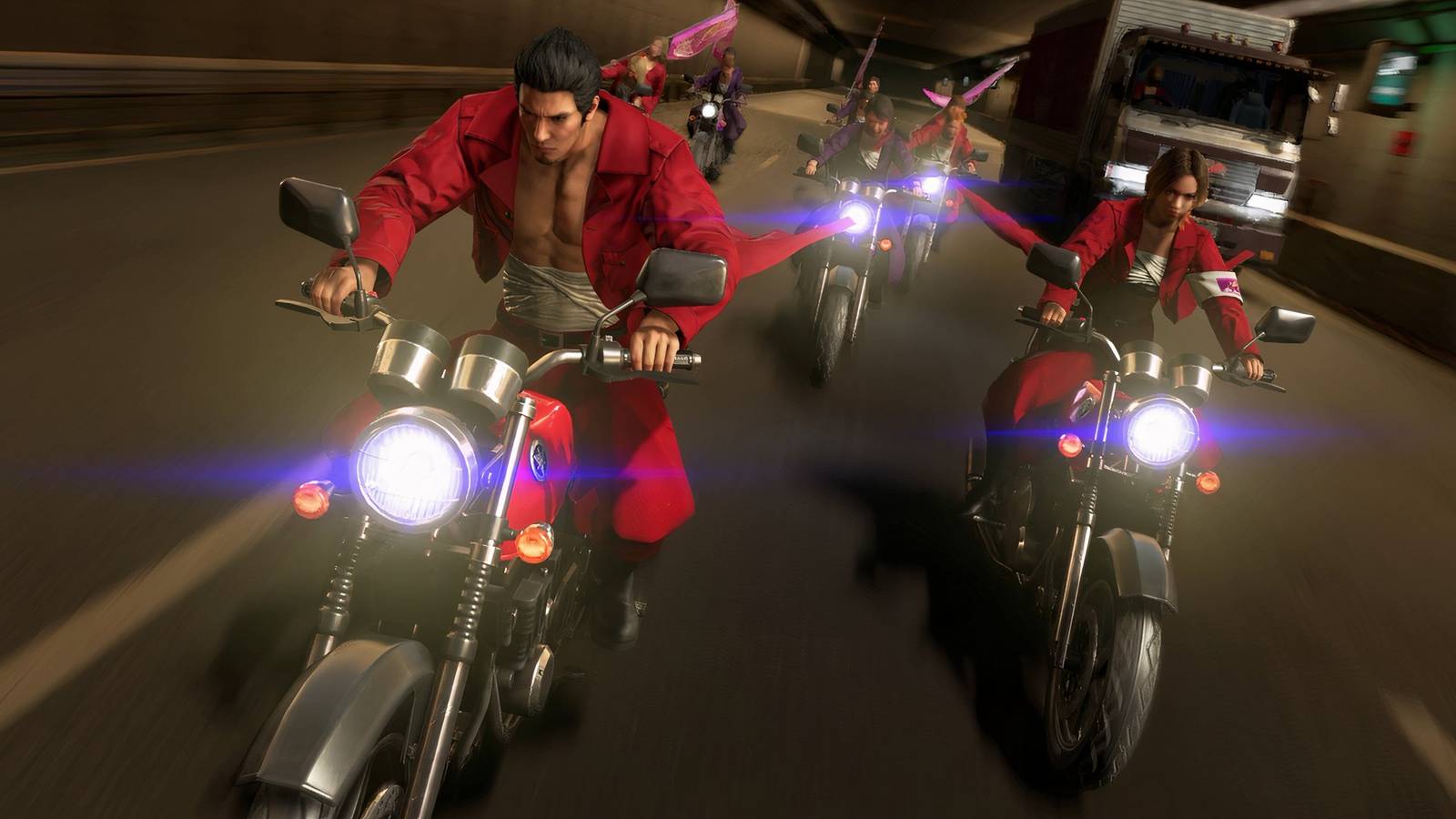
The change could be for a number of reasons, but it ended with unlocking the ice cream lady as a Baddie for your Haisai Girls motorbike gang, and that could literally be all the motivation the team needed to switch it up. You need to recruit fresh faces somehow, right?
Speaking of the Haisai Girls, that was another part of the game we got to explore during the preview. The brand new motorbike gang side content works in a similar way to your pirate crew in Like a Dragon: Pirate Yakuza in Hawaii or the coliseum in Like a Dragon: Infinite Wealth. You have a squad of characters that you can expand by recruiting NPCs, either by speaking with them on the street or completing substories, and then you can build squads for various combat modes.
The Rumble options are Turf Wars, where you infiltrate enemy bases, Total Annihilation, where all squads clash against the enemy, or Baddies Battle, where one squad faces off against an opposing team. The previous iterations of this style of side content was received well by fans, so I’m not surprised to see a new version added for Yakuza Kiwami 3. You can even recruit the old woman in the leopard print sweater. Need I say more?

Yakuza Dark Ties Preview: Now That’s How You Please The Fans
Dark Ties is a separate game that comes bundled in with Yakuza Kiwami 3, and it’s exactly what fans have dreamed of.
The Perspective Of A Bad Guy

I’m most excited about Dark Ties, as Yoshitake Mine has always been one of my favourite characters, and so getting more time with him and a look at who he used to be is utterly tantalising. For the preview, we checked out the Kanda Damage Control gameplay, which sees Mine doing good deeds in Kanda’s name in an attempt to improve his reputation.
It’s a way for the core gameplay of the series to still work even when you’re a ‘bad guy’, as otherwise, why would a yakuza like Mine be helping people around town? Instead of substories, you have Good Deed Quests, and then confusingly, NPCs that appear on the map with substory icons offer Helping the Little People tasks, which are just brief item exchanges usually. There are also Damage Control Challenges, which are the same as the usual challenges – doing a certain amount of damage, or spending a certain amount of money, you get the idea.

What I found interesting about this though, is that Mine is not Kiryu. The gameplay might be similar, but the approach is noticeably different, and it’s refreshing to play from the perspective of someone who is not an outright do-gooder. In one Good Deed Quest, Mine is checking out a non-profit organisation that is helping the homeless, and during this quest he comments on how he thinks it’s a waste of time to help them.
You know full well Kiryu would not be negatively commenting on homeless people. Mine still puts the legwork in, serves the soup, saves the day, and of course, gets some emotional touching point from one of the characters involved about why the work matters, but the approach to it is so different from what we’re used to. Mine is more critical; there’s a motive for why he’s doing these ‘good deeds’, and I can’t wait to see how this is explored more in the full game.
We also checked out the Hell’s Arena, which is like a coliseum-dungeon mash-up that Mine can progress through.
The Yakuza Series Has Always Evolved And Changed

Some spoilers for Yakuza Kiwami 3 ahead.
Both of the previous Kiwami titles went beyond just improving the originals in both visuals and mechanics, but added new gameplay content, fresh scenes and dialogue, and side activities. I adore the Majima Everywhere system of the first Kiwami, I love the Majima Saga of the second Kiwami, but it goes beyond Majima and my infinite love for him. There are new minigames, fresh substories, expanded character arcs, and other side content.
Kiwami remakes offer more emotional or narrative depth to the events and characters involved, or simply a new way to have a bit of fun when you’re not chasing down the narrative. These included changes and additions; we got to see far more of Akira Nishikiyama in flashbacks to help delve into his character more. I think most fans would agree that overall, the changes made in the first two Kiwami titles improved the games.
I think part of the aversion to change as we look at Yakuza Kiwami 3 is that, despite Yakuza 3 still being a very old title that launched in 2009, it’s a significant step up from the clunky PlayStation 2 games that desperately needed the Kiwami treatment. The characters and events in the Yakuza series became more grounded with each new title, and as the fandom grew, creating a more solid foundation, and so the further we get through the series, the more taboo it feels to mess with the history of it in any way.

It’s not just the Kiwami games that enact change and evolution, but the series as a whole. And I mean beyond the obvious of mixing up the combat style, protagonists, or location, but also when it comes to the lore and events of the series. There have even been times the series’ established history has been blatantly retconned. In the original PlayStation 2 version of Yakuza, Goro Majima’s tattoo only covered one side of his chest, and it’s not the same design. By the time Yakuza 2 came along, it had been switched up to the tattoo we now consider the real deal.
Yakuza 0 fleshed out the core characters’ backgrounds, recontextualising why they became the way they are, and ultimately leading to an eternal fan debate of whether Majima is putting on the Mad Dog persona or if he really did become unhinged. Though both Osamu Kashiwagi and Andre Richardson were believed to be dead, with the latter literally being thrown from a rooftop, they went on to appear in later games as bartenders.
Most recently, the Yakuza 0 Director’s Cut retcons a few deaths by adding new scenes, with the most notable being that of Wen Hai Lee, who had previously died in a car explosion. The Director’s Cut revealed he actually survived, despite the van being blown to smithereens. So are we really surprised that Kiwami 3 is evolving the series history?

While it’s true that retconning some of these deaths or events may undermine the motives and actions of the characters at that time, it’s generally been small fry characters who have escaped the grave. In a world where a castle can rise out of the ground, you punch tigers in the face, and even face off against giant squids, we have to accept that the world of Yakuza is a little silly. And let’s face it, that’s part of what we love about it.
With that in mind, it’s not that far-fetched to believe a guy could survive a car bomb or nosedive from a roof. It would be a bigger problem if RGG Studio started retconning some of the more important character deaths, but I have faith that it wouldn’t do us dirty like that.
We already know that Yakuza Kiwami 3 is going to be quite different from the original, and Dark Ties may very well lead to some new fan debate about Mine’s character as we delve into his backstory and how he became a yakuza in the first place, potentially changing how we understand him as a whole.
Sega revealed it would be releasing a Yakuza Kiwami 3 & Dark Ties public demo at some point in the near future.
The Hamazaki-Shaped Elephant In The Room

While I’m all for embracing change, and will only be passing judgement after playing through Yakuza Kiwami 3 fully, there is one change I am not on board with, much like the rest of the fans who are rightfully up in arms about it. The recasting of Goh Hamazaki. Previously portrayed by George Takahashi in the original, Yakuza Kiwami 3 utilises both the likeness and vocals of Teruyuki Kagawa instead. Kagawa was previously accused of and admitted to sexual misconduct where he forcibly touched a woman. Fans have been petitioning for his removal from the game, but so far neither Sega nor RGG Studio have responded, with their silence only seeming to confirm that they won’t be recasting Kagawa.
One of the biggest problems with this is that RGG Studio and Sega previously set a precedent where they did remove actors accused of illegal activity. The most high profile case was the recasting of Pierre Taki, who provided the voice and likeness for Kyohei Hamura in Judgment. After he was arrested on suspicion of cocaine use and later admitted to the offence, the character was completely recast. Hamura’s face was remodelled, and a new voice actor was brought in to redo all the lines.
This happened after the launch of the game in Japan, so Sega withdrew the original version entirely and then released a new version.

The character of Masayoshi Tanimura from Yakuza 4 was also recast for the PlayStation 4 remaster, as Hiroki Narimiya, the original actor who gave both his voice and likeness to the character, became embroiled in a drug scandal in 2016. Though Narimiya later proved he didn’t actually use drugs, the damage to his reputation was already done, and so Sega had Toshiki Masuda take over the role for the remaster.
Given how Tanimura was recast even after the actor proved his innocence, and how Kagawa’s crime is significantly more serious than that of Taki or Narimiya, it doesn’t seem to make sense to fans, myself included, why Sega won’t recast Hamazaki in Yakuza Kiwami 3. Though part of me thinks there’s still time, considering that Judgment being on store shelves didn’t stop that recast, the silence on the issue from Sega and RGG Studio feels deafening. It’s hard to get fully invested in RGG’s vision if it includes this.
Yakuza Kiwami 3 & Dark Ties launch together on February 12, 2026, so it won’t be long before we can see exactly how much of the original game has been changed. Right now, I’m still stoked about getting hands on with it, especially with more Mine action. I’ll also keep holding out hope for some movement on the Kagawa recast issue as currently it’s a huge dampener on all the things Yakuza Kiwami 3 looks set to impress with.

- Released
-
February 11, 2026
- ESRB
-
Mature 17+ / Blood, Intense Violence, Sexual Themes, Strong Language, Use of Alcohol, In-Game Purchases
- Developer(s)
-
Ryu Ga Gotoku Studio