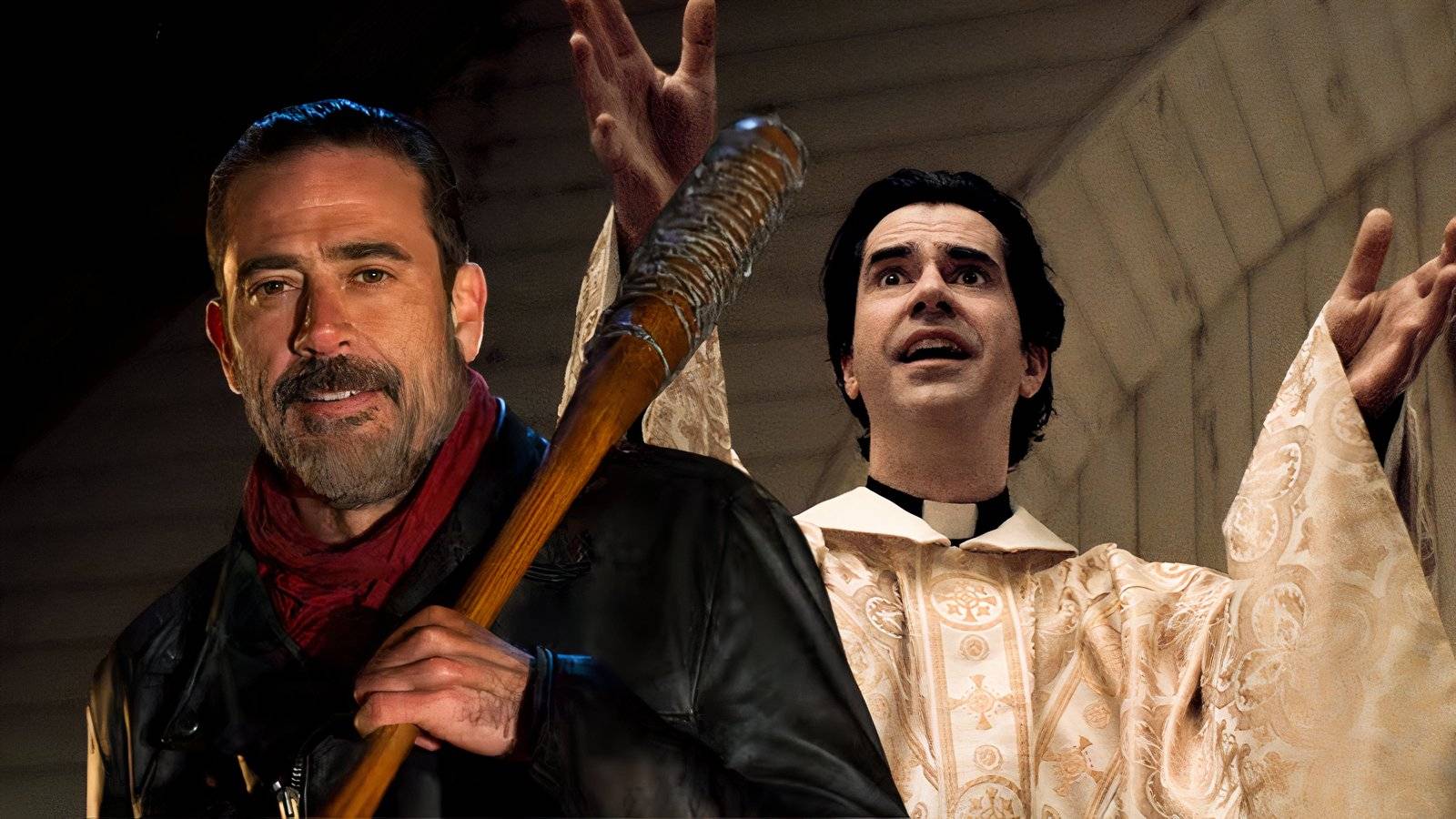
The New York Times’ list of the Greatest TV Shows of the 21st Century has only been live for a few days, but it has already stirred up plenty of discussion. While obvious favorites like Breaking Bad and Succession made the top 10, readers have taken issue with certain exclusions. Some audiences noted the inconsistent guidelines for eligibility, while others looked at the selective treatment of anthology shows, where only Season 1 of True Detective and Beef were selected while the entirety of Black Mirror secured a place.
The NYT’s list also didn’t distinguish between a show at its peak and one that subsequently went off the rails, which is presumably how Game of Thrones ended up in the top 10 despite its famously controversial final seasons. Of course, the NYT was faced with a tall task: Any attempt to narrow down more than two decades of television into a single 100-show ranking is inevitably going to be difficult, though the omissions are sometimes just as interesting as the inclusions. Some TV shows were clearly snubbed, and others were perhaps too obscure to have been seriously considered. In any case, here are 11 series that deserve a place on the list.
11
Review

Review is hardly a mainstream show, but the NYT’s list included many Nathan Fielder projects, as well as I Think You Should Leave and How To With John Wilson, which suggests that there could easily have been room for Andy Daly’s virtuoso character-based comedy. The premise is simple: audiences send in various challenges for host Forrest MacNeil (Daly) to experience, after which he provides a review. The subjects range from simple experiences, like eating 15 pancakes and going to prom, to increasingly dangerous ideas, like joining a cult, being buried alive, and committing murder.
What begins as a parody of consumer-review television gradually becomes something far stranger. The joke isn’t simply that Forrest is willing to do ridiculous things for his job; it is that he takes the show completely seriously, even as his increasingly destructive commitment to the show wrecks his life. At its most abstract, Review could be painfully funny.
The episode built around the phrase “There All Is Aching” turns an apparently meaningless challenge into one of the show’s strangest and most introspective stories, while the cult and perfect-body episodes descend into absolute chaos. Through it all, Andy Daly is incredible. He fully embodies the polite, diffident, and endlessly game Forrest, which makes him one of television’s great comic characters: simultaneously pathetic, arrogant, earnest, deluded, and occasionally heartbreaking. He’s up there with Alan Partridge and Nathan Fielder as one of television’s great comic creations.
10
The Terror (Season 1)

If the New York Times is able to pick and choose individual seasons, so can readers. The first season of The Terror is a gripping, prestige thriller based on the doomed Franklin expedition, and it follows the crews of HMS Erebus and HMS Terror as they become trapped in Arctic ice while searching for the Northwest Passage. As food runs out, temperatures plummet, and morale collapses, the expedition becomes increasingly desperate, as a mysterious monster begins picking off crewmembers one by one.
What makes The Terror so effective is that the supernatural element never overwhelms the historical drama. The monster is frightening precisely because it is only one of many threats facing the men trapped in the ice, not least of which is the danger from within. A stellar cast including Jared Harris, Ciarán Hinds, Tobias Menzies, Paul Ready, and Adam Nagaitis provides some of the most nuanced, gripping, and layered performances in recent television.
Harris’s Captain Crozier is particularly compelling, while Ready is perpetually endearing as the mild-mannered surgeon’s assistant, Mr Goodsir. There are individual sequences that remain astonishing years later, from Crozier’s speech announcing his intention to go cold turkey to the terrifying encounter between the creature and Mr. Blanky (Ian Hart). It’s a historical drama, survival thriller, horror, and character study all at once. If we’re allowed to pick individual seasons, The Terror Season 1 absolutely deserves a place on this list.
9
Inside No. 9

Forget Black Mirror, Inside No. 9 is far and away the most consistent in quality of all the recent anthology shows. Created by The League of Gentlemen stars Steve Pemberton and Reece Shearsmith, the series consists of standalone stories, usually set in a single location with a connection to the number nine. This simple restriction has produced an astonishing variety of television; some episodes are utterly terrifying, some are laugh-out-loud funny, and others are emotionally devastating.
Inside No. 9‘s genius lies in the freedom its format provides. There is no requirement for recurring characters or mythology, no expectation that one episode must set up another, and no particular genre it has to stick to. The only real rule is that it has to be good. And remarkably, across nine seasons, it almost always is. Pemberton and Shearsmith managed to create remarkably sophisticated plots, indelible characters, and shocking twists, and did so within an impressive timeframe of just 30 minutes. Perhaps Inside No. 9 was excluded because it’s a niche hit in America, but it feels particularly difficult to justify leaving out such a high-quality and original TV show.
8
Mr Inbetween

A series that is doomed to forever hold the label “the best show you’ve never heard of,” Mr. Inbetween is an unconventional, darkly funny, and criminally overlooked FX drama. Based on Scott Ryan’s film The Magician, the series follows Ray Shoesmith, a hitman who is also a father, friend, and seemingly ordinary man trying to navigate everyday life. What makes the show so effective is its refusal to turn Ray into a conventional antihero; he isn’t a conflicted character or romanticized criminal mastermind but a violent man who happens to live a surprisingly mundane life. As such, much of the series treats his criminal activities as background noise.
Ray will go to a children’s birthday party, have a conversation with his daughter, and then kill someone. The juxtaposition is frequently funny, occasionally horrifying, and often both at the same time. The episode “Socks Are Important,” in which a child is abducted, is perhaps the perfect example. The most nail-biting, unbearably tense episode of Mr. Inbetween follows Ray desperately trying to work out which of his numerous enemies has decided to take revenge against him, only for the eventual explanation to be something considerably more sinister.
The killings aren’t really the point. Mr. Inbetween is more interested in Ray’s anger, (that smile he flashes at potential victims is chilling) and his relationship with his daughter, which makes the violence all the more shocking when it arrives. Unexpectedly moving and remarkably economical, Mr. Inbetween is one of the best crime dramas of recent years – and at only three seasons, there’s very little excuse for not watching it.
7
Mindhunter
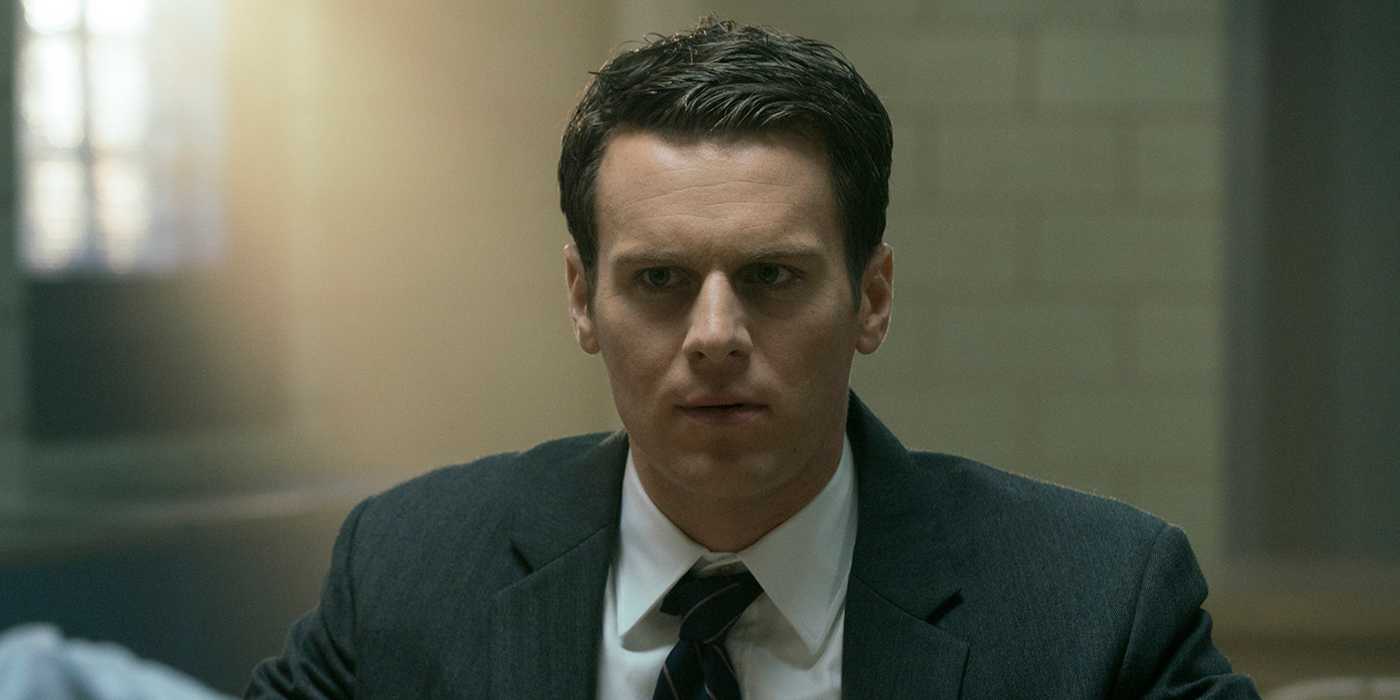
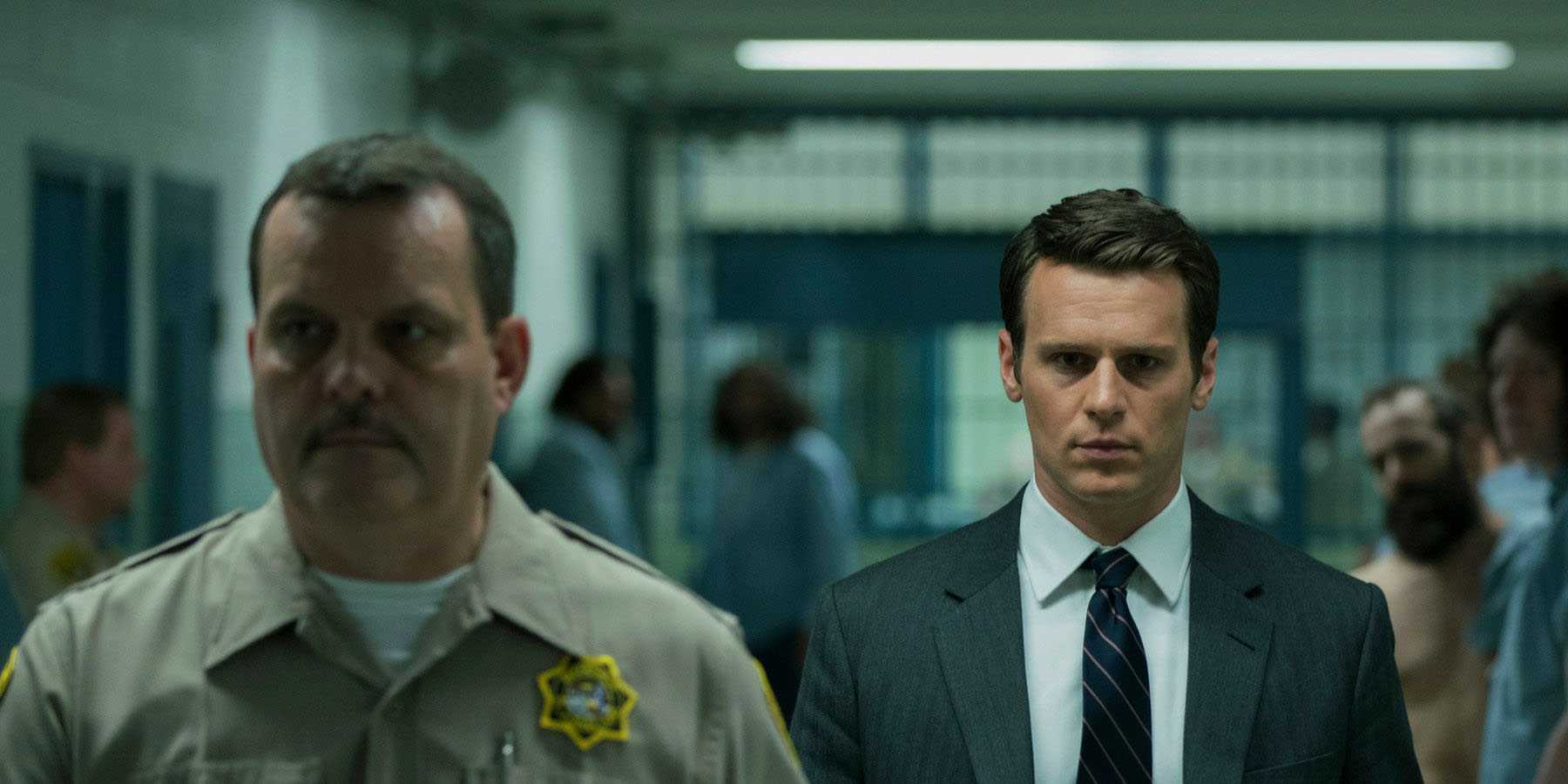
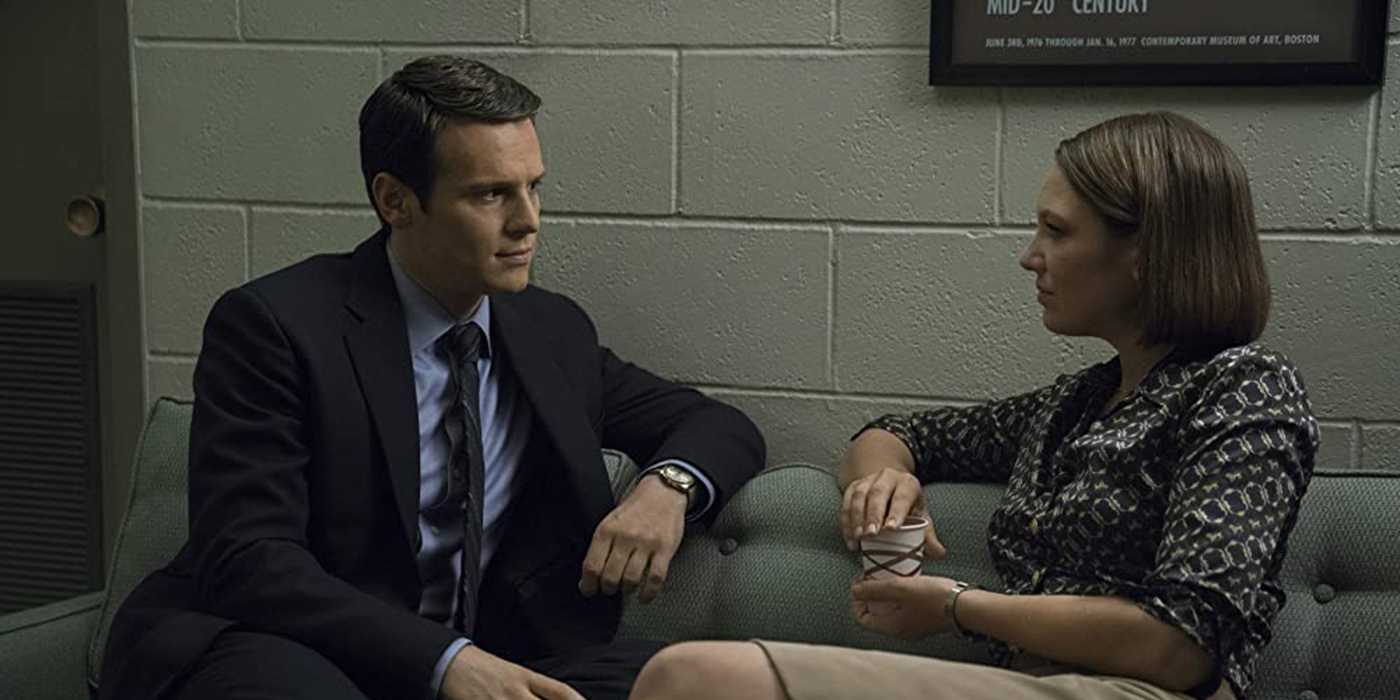
Mindhunter is such a widely praised series that its exclusion from the NYT’s list is confusing, especially given the presence of several other crime shows. David Fincher’s drama follows two FBI agents studying incarcerated serial killers before the term “serial killer” had even entered common usage.
Half true crime, half character drama, Mindhunter was one of Netflix’s biggest thrillers, thanks in no small part to the extraordinary performances from Jonathan Groff, Holt McCallany, and Anna Torv. Somehow, the show turned the seemingly dry subject of criminal profiling into genuinely gripping television. What makes Mindhunter so effective is that it understands that the most frightening thing about serial killers isn’t necessarily what they do, but the process of trying to understand why they do it. The interviews with infamous killers are among the show’s most memorable sequences, but Mindhunter is equally interested in the people conducting them.
Ford’s growing obsession with understanding violent criminals gradually blurs the line between professional curiosity and personal fixation, while Bill Tench and Wendy Carrie’s attempts to balance their work and personal lives give the series an emotional weight that could easily have been lost amid the procedural detail. Its muted cinematography, precise compositions, and clinical atmosphere turn even a conversation in an office into something unsettling. The fact that Mindhunter was canceled before its story could reach a conclusion is devastating, but that shouldn’t count against what it actually achieved.
6
Fargo

The NYT’s omission of Noah Hawley’s anthology series Fargo would be a lot easier to take if it weren’t for the fact that True Detective Season 1 made the cut. True Detective Season 1 is nothing short of excellent, but Fargo Season 1 was similarly widely-acclaimed, and the show maintained its high quality across the entirety of its run. Each Fargo season tells a largely self-contained story, with a new cast and setting, but they are all unmistakably part of the same universe.
Hawley never attempts to outright adapt the Coen brothers’ film, but rather mines their entire filmography for thematic ideas: ordinary people getting caught up in extraordinary circumstances, memorable villains, and the seemingly random ways in which violence can enter everyday life. One thing that remains in all seasons, however, is the idea of the banality of evil. In the first season, for instance, Martin Freeman’s Lester Nygaard begins as a mild-mannered, comically pathetic salesman, before further episodes reveal his darker underside. Billy Bob Thornton’s Lorne Malvo, meanwhile, seems to have stepped out of some strange existential nightmare.
Subsequent seasons explore even darker territory, with astonishing performances from the likes of Kirsten Dunst, Zahn McLarnon, Ewan McGregor, David Thewlis, Mary Elizabeth Winstead, Ben Whishaw, Bokeem Woodbine, and Carrie Coon. With its sprawling plots and bizarre mixture of crime thriller, black comedy, and existential tragedy, Fargo is some of the most ambitious television of the past 20 years.
5
The Killing

Unfortunately, but perhaps predictably, foreign-language shows had a poor showing on the NYT list, with only Squid Game, Shōgun, and The Bureau making the cut. This makes the omission of The Killing particularly disappointing, because its influence can still be felt so potently in the crime television that followed it. The Danish show introduced audiences to a very different kind of murder mystery. Rather than treating a murder as a self-contained mystery that could be wrapped up within an hour, The Killing allowed a single investigation to provide the framework for an entire season.
At its center is Sarah Lund, played brilliantly by Sofie Gråbøl, who’s very different from familiar TV archetypes. There is no eccentric gimmick, tortured genius persona, or endless parade of personal problems designed to make her “interesting.” Instead, she is obsessive, intelligent, and intensely committed to her work, sometimes to her own detriment. The result was a character who became hugely influential as television increasingly embraced flawed but compelling female investigators. The influence of The Killing can be seen in the wave of Nordic and Nordic-inspired crime dramas that followed, from Borgen and Wallander to The Fall, Broadchurch, Unforgotten, and Happy Valley. Even if you don’t consider The Killing one of the greatest crime dramas ever made, its place in the history of modern television is difficult to ignore.
4
Midnight Mass

Miniseries were also poorly represented in the NYT’s list, but the absence of any Mike Flanagan project is particularly egregious. Flanagan has become one of the most distinctive auteurs in contemporary horror television, responsible for excellent TV shows of recent years, such as The Haunting of Hill House, The Haunting of Bly Manor, and The Fall of the House of Usher. His work has helped demonstrate that horror television can be every bit as ambitious, character-driven, and thematically rich as prestige drama.
Midnight Mass remains Flanagan’s finest work. The story follows Riley (Zach Gilford), who’s recently released from prison and returning to the small, isolated island community that is his hometown. His arrival coincides with that of a charismatic new priest, whose presence appears to change the fortunes of the town for the better. From there, Midnight Mass slowly transforms from a mystery about faith and religious revival into something considerably more disturbing.
Flanagan uses horror as a vehicle to explore faith, guilt, addiction, mortality, and the human desire to believe that there is something beyond our ordinary existence. The show’s verbose monologues about death, religion, and the meaning of life proved divisive, but they give the eventual horror considerably more weight. And then, when the philosophical musings are exhausted, and Flanagan unleashes the real horror at the story’s core, it’s both earned and incredibly effective.
3
GLOW

Perhaps GLOW was left off the NYT’s list because the series was unceremoniously canceled after its third season, before it could finish its story. If so, that’s a shame, because GLOW was one of the most entertaining comedy dramas of recent years. Based loosely on the real-life Gorgeous Ladies of Wrestling, the series follows a group of women recruited to make a low-budget wrestling television show.
What could easily have become a disposable nostalgia comedy instead develops into a remarkably thoughtful series about friendship, ambition, sexuality, race, class, and the compromises involved in turning yourself into a television character. It also threads the tricky needle of being accessible for anyone who knows nothing about wrestling while also getting enough right to satisfy genuine fans. At its center are Alison Brie and Betty Gilpin, playing two friends whose complicated relationship provides much of the show’s emotional backbone.
Gilpin in particular is fantastic, gradually transforming Debbie from a seemingly conventional suburban mother into one of the show’s most complicated characters. Marc Maron gives a surprisingly nuanced performance as the cynical director, and the ensemble find moments of poignancy and humor in their characters, making the entire cast feel like real people rather than just background decoration. Even though GLOW never got its ending, the show maintained a high quality for its entire run, which is in stark contrast to other shows on the list that went downhill.
2
The Walking Dead

Arguably the biggest and most egregious omission from the NYT’s list is The Walking Dead. Based on Robert Kirkman’s comic book series, The Walking Dead begins with sheriff Rick Grimes waking from a coma to find that civilization has collapsed under a zombie outbreak. The walkers provide plenty of horror, but the show’s best years understood that its real strength was the people forced to fight for survival among them; characters including Rick, Daryl, Negan, Glenn, Michonne, and Carol were repeatedly pushed into situations where they had to tackle grief, morality, leadership, and just how much of their humanity they were willing to sacrifice.
The Walking Dead expanded far beyond its initial premise, and at its peak, it could be frightening, devastating, and unexpectedly intimate. Episodes like “Look at the Flowers” and Glenn’s death became genuine television events, while villains like Negan gained such immense popularity that he became a pop culture icon. The show’s absence from a list on the 100 Best TV Shows of the 21st Century is incredibly difficult to overlook, especially when its cultural impact is considered among its creative highs.
For several years, The Walking Dead was one of the biggest shows on American television. Its Season 5 premiere attracted 17.3 million viewers, then a series record. Of course, later seasons proved more divisive, but an 11-season run shouldn’t erase how extraordinary its peak was. A list celebrating the century’s best television can reasonably criticize inconsistencies, but leaving out a show that turned zombie horror into mainstream appointment TV, with that level of popularity and cultural reach, is a missed opportunity.
