BEIRUT: Fears of a major escalation between Israel and Hezbollah have left many Lebanese on edge, exacerbating mental health problems and reviving the trauma of past conflicts in the war-weary country.
A 29-year-old woman who lives near the southern city of Sidon said she was terrified by the roar of Israeli planes, explosive bombs regularly breaching the sound barrier.
“I feel like the house is falling on me … sometimes I freeze … or start crying,” said a woman working at an NGO.
She was 11 when Israel and the Lebanese militant group Hezbollah went to war in the summer of 2006, and said a bomb fell near her home.
“Sometimes, unconsciously, you remember it,” said the woman, requesting anonymity in a country where mental health issues are often stigmatized.
“These voices give you flashbacks — sometimes you feel like you're back in time,” she said.
Since Hamas's Oct. 7 attack on Israel triggered the Gaza war, Hezbollah has engaged in daily cross-border firefights with Israeli forces in support of the Palestinian militant group, and tensions have escalated.
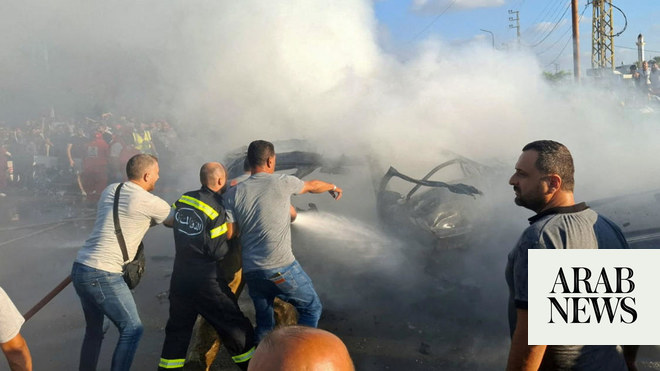
Lebanon has been on a knife's edge since the assassination of Hezbollah's top military commander last week in the southern suburbs of Beirut, hours before Ismail Haniyeh, the political leader of Hamas, was killed in Tehran.
Iran and Hezbollah have vowed to retaliate, amid fears that revenge attacks could spiral into an all-out war, with airlines suspending flights to Lebanon and countries urging foreign nationals to leave.
“I was already suffering from anxiety and depression, but since October, my mental health has deteriorated”, said the woman, who could not get treatment as work slowed down due to hostility.
“You fear for the future,” she said.
Before the 2006 Israel–Hezbollah war, Lebanon suffered a 1975–1990 civil war in which Israel invaded the south and besieged Beirut in 1982.
Recent cross-border violence has killed more than 560 people in Lebanon, most of them fighters but also at least 116 civilians, according to AFP figures.
On the Israeli side, including the occupied Golan Heights, 22 soldiers and 26 civilians have been killed, according to army figures.
Laila Farhood, a professor of psychiatry and mental health at the American University of Beirut, said the “cumulative trauma” has left many Lebanese with stress, anxiety, depression and post-traumatic stress disorder.
“People pass their anxieties on to their children as a form of cross-generational trauma,” she told AFP.
“What's happening now triggers the previous trauma,” which causes some people to have panic attacks, said Farhood, an expert on war trauma and its effects on Lebanese civilians.
On Tuesday, Israeli jets breached the sound barrier in central Beirut, triggering loud sonic booms that rattled windows and rattled nerves, two days after the anniversary of the devastating explosion in Beirut's port in 2020.
“I had my first panic attack,” said Charbel Chaya, 23, who studied law in France and lives with his family near Beirut.
“I couldn't breathe, my legs started to go numb… In that first moment, you don't know what the sound is – like what happened on August 4,” he said.
Lyall Hamzeh of Embrace, a non-profit organization that runs a mental health center and suicide prevention hotline, said Lebanese people are now “more sensitive to any voice.”
“Baseline, adrenaline is already high. It's a stressful situation,” said Hamze, a clinical psychologist.
“It's not just the Beirut explosion,” Hamz added.
The “natural or automatic response” should be fear, she said, and while “maybe the older generation … are a little more accustomed” to such sounds, they can trigger “collective shock.”
Some on social media have urged people to stop setting off fireworks – a ubiquitous practice for celebrations – while funny skits have also circulated making light of difficulties such as flight cancellations.
Because coping mechanisms are so different, some people are “going to the party,” while others are “reaching out more into the community,” which helps them feel like they're not alone, Hamz said.
Andrea Fahed, a 28-year-old dancer whose flat was damaged in the port explosion, said she was terrified when she heard the sonic boom this week.
She said she feels “lucky” to be a dancer, because with her community “we laugh together, we live together … you leave a lot of things behind.”
But she said the “uncertainty” was a constant struggle, and now she leaves her windows open for fear another blast will shatter everything.
“Anything can happen,” Fahed said.
“If it's happening so rapidly in Gaza, why isn't it happening here?”