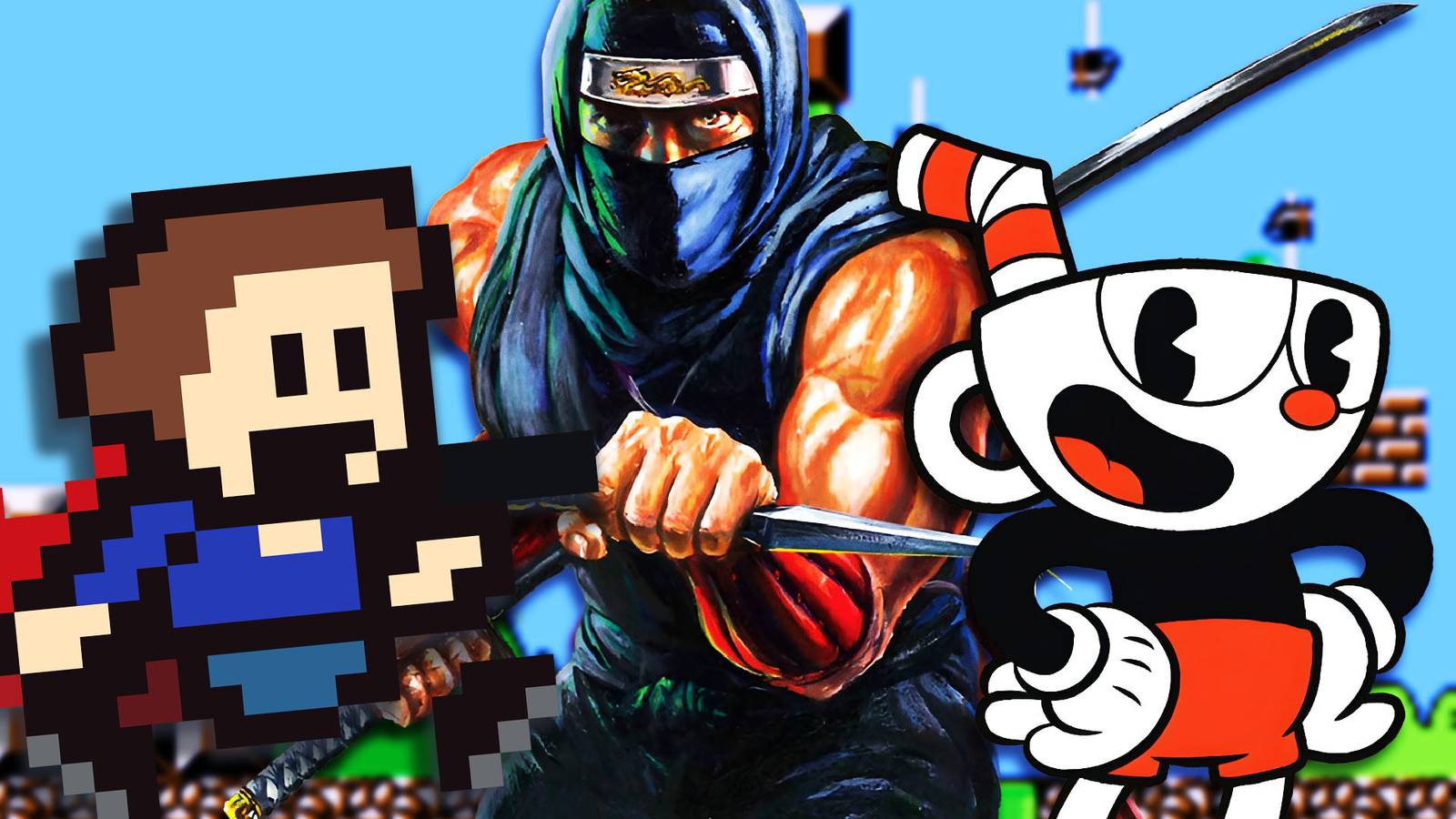
Platformers have always proved themselves as some of the toughest games in the entire industry, as, despite their simplistic mechanics, the amount of precision and skill required to beat them can be incredibly high. The challenge may come from the unforgiving nature of the falls or the constant need for inputs, but the common thread that ties them all together is just how brutal they are to play.

7 Most Underrated Platform Games With Clever Level Design, Ranked
These platformers don’t just slap a new coat of paint on Mario. They all feature really inspired level design, and they don’t get enough credit for it
Difficult games have been around since the very beginning, and a lot of them remain incredibly hard even today, yet as time has gone on, more entries have made their way into the ever-growing list of ruthless platformers. It doesn’t matter if players go back 40 years or less than a decade; they are bound to stumble upon a tough and grueling adventure that will test the limits of their reflexes, mechanics, but most of all, their patience.

Rearrange the covers into the correct US release order.
Rearrange the covers into the correct US release order.
Easy (5)Medium (7)Hard (10)
10
Super Mario Bros.: The Lost Levels
Familiar Name But Way More Unforgiving
Details:
- Classic controls pushed to their limit
- Designed to challenge even experienced players
Super Mario Bros.: The Lost Levels takes the foundation of the original Mario formula and strips away its accessibility in place of a far less forgiving and harsher experience. What initially appears familiar quickly reveals itself as something far more demanding, requiring exact timing and memorization in a way that the previous games just didn’t have.
The player’s progression is largely defined by repetition, as hazards are often designed to catch players off guard, and unexpected level shifts make brute force runs nigh impossible. While still approachable when compared to some other platformers out there, its design philosophy still manages to introduce a more punishing side of the genre, where even small mistakes carry significant consequences.
9
Spelunky
No Second Chances
Details:
- Roguelike loop before it was mainstream
- Procedural levels ensure constant unpredictability
Spelunky builds its difficulty around unpredictability, combining precise platforming with roguelike progression that ensures no two runs play out the same way. The randomness means that new layouts are generated every time, filled with traps and environmental hazards that interact in unexpected ways, and that unpredictability forces players to think quickly, as even familiar situations can resolve in entirely unexpected ways.
One of the more brutal aspects of the game is how many of the systems overlap, creating explosive chain reactions that can end a run in seconds. A misclick or an accidental fall can trigger a series of traps, enemies, and falling objects simultaneously, leaving little room for recovery and, in most cases, leading to yet another death screen.
8
Contra: Shattered Soldier
Relentless Arcade Chaos
Details:
- Fast-paced, often overwhelming gameplay
- Memorization becomes the main focus
Contra: Shattered Soldier delivers a relentless stream of enemies and hazards, demanding quick reflexes from the moment the action begins. The game rarely offers moments of relief, constantly pushing players into high-pressure scenarios where timing and positioning are critical, which directly reflects its arcade roots, where challenge and replayability are often prioritized over fairness.

8 Best 2D Platformers On Switch, Ranked
Nintendo built its empire on 2D platformers, and the Switch is no different. Here are some of the finest 2D platformers available on the handheld.
There are no easy paths to success, and the player’s ability to move forward depends entirely on learning enemy patterns and mastering the movement, whilst keeping mistakes to the absolute minimum. Also, the boss further amplifies the difficulty, requiring even more care and speed than before, and adding an extra layer of challenge to an already pretty brutal game.
7
Cuphead
A New Gaming Classic
Details:
- Boss focus with varied mechanics
- Endurance fights rather than single paths to victory
Cuphead has quickly become a classic in the gaming world, largely for its distinctive art style but also its crazy difficulty. Players need to complete two types of levels across a range of maps, one all about running and gunning, and the other, pitting them against a ruthless boss with more than a few tricks up their sleeves.
The challenge comes from how many different things players need to factor in, whilst dishing out damage to keep the fights from running too long. Holding down the fire button is one thing, but having to hop over bullets and prepare for changes in the stage makes a lot of the later battles feel incredibly taxing, transforming the game from a cartoony platformer to a true test of skill.
6
Super Meat Boy
Dying Over And Over
Details:
- Precise jumps needed at all times
- Fast resets ensure deaths rack up quickly
Super Meat Boy is a very different kind of platformer that shows its true colors right from the start. The game outlines very clearly that players are in for a real hard time, throwing them straight into the fray and forcing them to run and jump their way across each level to avoid the dozens of saws, spikes, and electrically charged surfaces that coat the entire world.
Because of how quickly the respawns are, players can get right back into things after failing a section, but what that also means is that the levels themselves are far more brutal, due to the lack of runbacks in between. By the later stages, the number of obstacles and perfect jumps needed starts to get pretty silly, and if players are going to try and make it through, they need to prepare their minds far more than their bodies.
5
Dr. Jekyll And Mr. Hyde
Frustrating By Design
Details:
- Unpredictable mechanics
- Punishing progression with little guidance
Dr. Jekyll and Mr. Hyde is infamous for its strange design and unforgiving mechanics that leave many players confused before things really kick into gear. The central mechanic is the transformation system that shifts the gameplay between two vastly different styles, but combining that with the lack of clear direction makes progression difficult, often requiring trial and error to understand even basic objectives.
A lot of the difficulty arises from that opaqueness, with the game feeling actively hostile to players purely from a design perspective. The sudden transformations and poorly explained mechanics create an overwhelming sense of unpredictability, and the result is a game that is difficult solely due to how hard it is to understand.
4
Ninja Gaiden
Precision Under Pressure
Details:
- Brutal, almost unfair enemy placements
- Knockback system adds even more challenge
Ninja Gaiden stands as a defining example of early platforming difficulty, providing players across several generations with one of the greatest gaming challenges they will ever experience. For starters, the enemies are placed in a way to disrupt movement, often appearing at the worst possible moments, and then there’s the knockback system, which further increases the challenge, frequently pushing players into fatal hazards after taking a single point of damage.
On top of the already frustrating systems, the levels themselves add even more difficulty, demanding a huge amount of precision as well as a keen memory to clear them in one piece. It’s all about focus and determination, and despite its age, it remains one of the hardest games in the entire genre.
3
I Wanna Be The Guy: The Movie: The Game
Subverting All Expectations
Details:
- Designed around unexpected traps
- Progress comes from remembering
I Wanna Be The Guy: The Movie: The Game builds its difficulty around subverting expectations, constantly surprising players with hidden traps and sudden hazards that can come out of absolutely nowhere. Seemingly safe areas often conceal instant-death mechanics, forcing players to learn through repeated failure, and the game also intentionally challenges assumptions, making even basic steps forward incredibly risky.

7 Best 3D Platformers On Steam
These 3D platformers available on Steam are perfect for fans of the genre.
Like many other tricky platformers, progressing depends on a lot of memorizing each obstacle and reacting instantly, rather than attempting to run through all in one go. The lack of forgiveness ensures that mistakes are punished immediately with a swift death, and because of how many times they are going to fail, players will quickly learn that knowledge and persistence are the only paths forward.
2
Jump King
One Miss And It’s Back To Square One
Details:
- No real checkpoints or save states
- Single mistakes can reset hours of progress
Jump King represents a new kind of design philosophy that trades player comforts for pure rage and frustration. Starting with the controls, the only movement players can use is jumping, rather than a fixed input, meaning that players need to learn how long to hold down the button and just how far certain leaps will take them, both horizontally and vertically.
That alone is already annoying enough, but the way the world is laid out means that a single fall can set players all the way back minutes and even hours of progress, depending on how devastating the fall is. There are no real checkpoints either, save for a few more forgiving platforms, turning the entire game into a tension-filled ride that will have players constantly on edge right up until the final jump.
1
Ghosts ‘N Goblins
The Original Gaming Test
Details:
- Extremely punishing with little forgiveness
- Second playthrough needed for the true ending
Ghosts ‘n Goblins is a notoriously difficult platformer and one of the most diabolically designed games ever created. Players face constant waves of enemies, unpredictable hazards, and limited durability, often losing armor in a single hit and dying shortly after, which means that they need to play pixel-perfect from the moment the game loads up, all the way until the credits roll.
Even reaching the end is not enough, as the game demands a second full playthrough to achieve the true ending, forcing players to relive all that pain that they had just experienced. Above all else, a lot of the systems and mechanics, like the enemy placements, just feel plain cheap, meaning that not only do players need to power through clunky controls and relentless attacks, but they also need to fight against the actual game design itself.

7 Weirdest Platformers on the PS1
The original PlayStation was home to some beloved classics, but there were some wonderfully weird forgotten gems as well.
