Key Takeaways
- Metal Gear uses real historical events, like the Soviet-Afghan War, blending fact and fiction.
- The series incorporates actual tech, organizations like DARPA, and atrocities like the Anfal Campaign.
- Characters like Sniper Wolf and Raiden are tied to real events and conflicts, including the Rhodesian Bush War.
Metal Gear is a strange series. It has a convoluted plot with many issues and retcons and plays fast and loose with history. Yet, it also has a keen attention to detail that even die-hard fans may be unaware of. Those floating platforms the Soviets had in Metal Gear Solid 3 were real, as was the Arsenal Ship project mentioned in Metal Gear Solid 2’s backstory.

Related
Metal Gear: 10 Bizarre Pieces of Technology (That Are Actually Real)
The Metal Gear franchise indulges in the bizarre, but these pieces of technology actually exist outside of fiction.
Real people from history played their part in the series, albeit largely off-screen. The games also use real historical events to drive the plot forward or flesh out a character’s role in the story. Obviously, the World Wars, the Cuban Missile Crisis, etc., are part of the series, but less famous events also played a part in Metal Gear’s history.
Updated October 20, 2024 by David Heath: Metal Gear’s timeline is bizarre enough without weaving real historical events into it. They could’ve made up similar but different events to shape its plot and characters, but the way it uses history helps add to its strange blending of reality and fiction. Giant, nuke-launching, walking mechs aren’t viable in a military setting (Sigint in MGS3 even mocks the idea), but the real organizations connected to them, like DARPA, and the strange but actually real tech that was made almost make it believable.
So, this list has been updated with more events that have affected both Metal Gear and the real world, along with how they differ. As meticulous as creator Hideo Kojima and his team were, they still took artistic license with the details. Otherwise, the games wouldn’t be as bombastic and dramatic as they are.
1 The Bykivnia Graves, Kurapaty Graves, & Katyn Forest Massacre
1937-1943, Soviet Union

- Metal Gear Solid 3: Snake Eater
Using real atrocities as dressing for a cackling villain’s backstory feels gauche, but since MGS3’s Colonel Volgin was a part of the NKVD, it’s inescapable. The NKVD was the Soviet Union’s secret police and a predecessor to the more notorious KGB. They were responsible for Josef Stalin’s great purge, and killing off suspected anti-communist parties for the USSR.
The Bykivnia Graves in Ukraine commemorate the 30,000 killed in its nearby woods. Meanwhile, the Kurapaty Graves is a memorial for the 250,000+ killed in the Belarusian forest from 1937 to 1941. The most infamous is the Katyn Forest Massacre when the Nazis discovered 22,000 bodies in mass graves when pressing through Polish territory in 1943. The Metal Gear series doesn’t go in-depth on their horrors, beyond mentioning that a young Volgin developed his sadism by taking part in the killings.
2 The Manhattan Project
1942-1946, United States

- Metal Gear Solid
- Metal Gear Solid 2: Sons of Liberty
- Metal Gear Solid 3: Snake Eater
- Metal Gear Solid: Peace Walker, etc.
This list aims to avoid large-scale events like the World Wars since they’re rather obvious inclusions. Yet the Manhattan Project has played such a huge part in the series that it’s unavoidable. The project saw the US develop the first atomic bombs, ending World War 2 and ushering in the nuclear age. Within the MGS canon, the Boss tried to assassinate one of its key leads, John von Neumann, based on bad intel. But she was stopped in her tracks by a bullet to the head.
She survived, and her recovery inspired the Peace Walker project, where one of its AI brains could take over for the other if it was damaged. Otacon’s grandfather also worked on the bomb, and his father was born on the day of the Hiroshima bombing, disabled from a birth defect produced by radiation exposure. Then MGS5 revealed some of its uranium was mined by Code Talker’s fellow Navajo, and some were taken from Shikolobwe Mine in the Congo, where CIPHER got its yellowcake. Name an MG game, and there will be some details linking it back to this project.
3 The Kyshtym Disaster
1957, Soviet Union

- Metal Gear Solid: Portable Ops
Before Chernobyl, the Kyshtym Disaster was the worst radioactive disaster in history. The area around Ozersk (now Ozyorsk) was already heavily irradiated thanks to pollution from the Mayak plutonium plant. But an explosion at the plant in 1957 covered the whole city in radioactive elements. As a result, most of Ozersk’s population was evacuated over the following two years.

Related
7 Best Games Set Within A Radioactive Environment
Games that are set within a nuclear wasteland often use radiation as one of the main hazards a player must survive. These are some of the best.
But that didn’t save them from suffering from radiation sickness, birth defects, and more. In MGS: Portable Ops, this disaster was the reason Elisa developed psychic powers as her family evacuated. However, it was further experimentation in East Germany that produced ‘Ursula,’ her second personality that has stronger powers at the cost of her emotions.
4 ARPA/DARPA
1958, United States

- Metal Gear Solid
- Metal Gear Solid 2: Sons of Liberty
- Metal Gear Solid: Peace Walker,
- Metal Gear Solid 5: The Phantom Pain
- Metal Gear Rising: Revengeance
The Cold War was called such because the two superpowers, the US and USSR, didn’t outright start bombing each other. The fear of mutually assured destruction from nuclear weapons kept them in a decades-long struggle of passive aggression and espionage, with tensions occasionally rising to threaten a nuclear holocaust during the Cuban Missile Crisis and the early 1980s. But the battle between the two sides caused sparks on other fronts.
In the wake of the USSR launching Sputnik 1, the first artificial satellite, the US established the Advanced Research Projects Agency, or ARPA. It later gained a “D” for “Defense” in 1972 to become DARPA. They developed the earliest form of the internet in ARPANET and played a part in developing weather satellites, drones, voice recognition software, etc. They’re also directly and indirectly behind much of the tech in the MGS series, from Metal Gear REX to Bladewolf, and Dr. Strangelove’s start in AI to Code Talker’s parasite research.
5 The Sandinistas
1961-Present, Nicaragua

- Metal Gear Solid: Peace Walker
- Metal Gear Solid: Ground Zeroes
The Sandinistas National Liberation Front, or Sandinistas for short, were far-left, eventually successful revolutionaries. Named after August Sandino, who rebelled against the US occupation of Nicaragua in the 1930s, they did the same with the US-backed conservative Somoza regime. Amanda led a group of them in PW, where they were hounded by the US Peace Sentinels and supported by the KGB until they met Big Boss.
In both history and MGS, the Sandinistas overthrew the last Somoza president, Anastasio Somoza Debayle, and took control of Nicaragua. They spent the following years fighting off the Iran-Contras, working against (and committing) electoral interference, and killing the nation’s native tribes alongside suspected dissidents. Whether Amanda took part in that isn’t known.
6 The Rhodesian Bush War
1964-1979, Zimbabwe, Southeast Africa

In 1960, UK Prime Minister Harold McMillan declared the country would grant their African colonies independence if the majority of their people voted for it. The largely white Rhodesian government, fearing it would lead to chaos, declared independence. This set them at odds with rival African Nationalist groups, like Robert Mugabe’s Zimbabwe African National Union (ZANU), and Joshua Nkomo’s Zimbabwe African People’s Union (ZAPU), who sought political reform on their own terms. This three-way conflict has since become known as the Rhodesian Bush War.

Related
The 8 Best Games That Let You Explore Africa
As one of the largest continents in the world, there’s only a select few amount of the best games that let players explore Africa.
In MGS, Grey Fox entered the conflict shortly before its end in 1979, where he killed a pair of civilians, but couldn’t bring himself to finish off their child too. Finding her half-starved by the Zambezi River, he adopted her as his little sister in a bid to soothe his guilty conscience. But he still cut her off from her past. As a result, she grew up to become Naomi Hunter, a geneticist who got into the subject in a bid to rediscover her roots.
7 Yukio Mishima’s Failed Coup D’Etat
1970, Japan

- Metal Gear Solid: Peace Walker
Famous for writing The Temple of the Golden Pavilion and the Sea of Fertility tetralogy, and for being a right-wing reactionary, Yukio Mishima is one of Japan’s most iconic literary geniuses. Yet, he’s more infamous for trying to overthrow the Japanese government by taking the commandant of Camp Ichigaya hostage and attempting to rally its troops to his side. When they heckled him instead, he committed seppuku.
According to MGS: Peace Walker, one of the troopers in the crowd was Kazuhira Miller. Already disillusioned with the Japanese Self-Defense Force, Mishima’s remarks about the troop’s loss of their “samurai spirit” were the last straw. He left the JSDF and became a mercenary, where he met Big Boss two years later.
8 Angolan Civil War
1975-2002, Angola, Southern Africa

- Metal Gear Solid 5: The Phantom Pain
Some wars in history aren’t continual states of conflict. They can be a series of skirmishes that get lumped together because the “peacetime” between them was too short and too tense. The Angolan Civil War had the occasional truce before its end. The two sides, the MPLA and UNITA, had fought together for Angola’s independence in the past but had different views on how to run the nation afterward.
The MPLA government had Marxist-Leninist views and was backed by the USSR and Cuba. UNITA became anti-communist conservatives backed by the US and Apartheid South Africa. It wasn’t until after the fall of the Soviet Union that the war incorporated PMCs (private military companies), but Metal Gear Solid 5 saw its own fictional PMCs popping up to support one side or another in 1984.
9 The Mozambican Civil War
1977-1992, Mozambique, Southeast Africa

- Metal Gear 2: Solid Snake
- Metal Gear Solid
Following the end of the Rhodesian Bush War, leading to the establishment of modern-day Zimbabwe, Grey Fox and Naomi crossed over the border into Mozambique, where he got work fighting in the Mozambican Civil War. He fought for the Mozambican National Resistance (RENAMO), which opposed the Mozambique Liberation Front (FRELIMO) and their attempts to establish a socialist one-party state. The conflict ended in 1992, but tensions between the two sides remained high.

Related
Best PC Mods for Metal Gear Solid 5: The Phantom Pain
PC gamers have access to a great variety of amazing mods for the PC version of Metal Gear Solid 5: Phantom Pain. These are the best.
At some point, Fox was caught by FRELIMO forces and tortured, where his ears and nose were cut off in the process. He was rescued by Big Boss, who took him and Naomi back to the US for treatment. Once Fox underwent reconstructive surgery, he and Big Boss went back to continue the fight. There isn’t a set date for these events beyond it being in the 1980s, but Fox was back in North America by 1988. It would be nice to think this happened in 1984, showing what Big Boss was doing while his doppelgänger was on the other side of the continent in Angola.
10 Soviet-Afghan War
1979-1989, Soviet Union & Afghanistan

- Metal Gear 2: Solid Snake
- Metal Gear Solid 5: The Phantom Pain
Fans will be familiar with the Soviet-Afghan War since it’s where MGS5 truly starts. Initially meant to back the country’s DRA regime, the Soviets’ war against the Mujahideen rebels essentially became their equivalent of Vietnam. They spent over a decade in the country fighting to back a government friendly to their interests, only to be beaten by guerrillas who knew the terrain better. Only here, the Mujahideen were backed by the CIA, with even Hollywood movies like The Living Daylights and Rambo 3 promoting their cause.
This would bite the US back though. Many rebels would eventually become part of the Taliban and Al-Qaeda, leading to America’s own messy campaign in the War on Terror decades later. MGS5 isn’t any different, as the Diamond Dogs’ missions frequently aid the rebels against the Russians. Before that game’s release, it was where Revolver Ocelot gained his ‘Shalashaska’ nickname, and where Metal Gear 2’s Holly White began her reporting career.
11 The Anfal Campaign
1988, Iraq

Indigenous to Eastern Turkey, Northern Iraq, Western Iran, and parts of Syria, the Kurds have often found themselves at odds with their neighbors, and vice versa. They’re still at odds with the Iraqi regime, as they’ve clashed over different issues since 1919, be it for their independence, for aid, or over resources. The most infamous flare-up in the conflict was the Anfal Campaign.
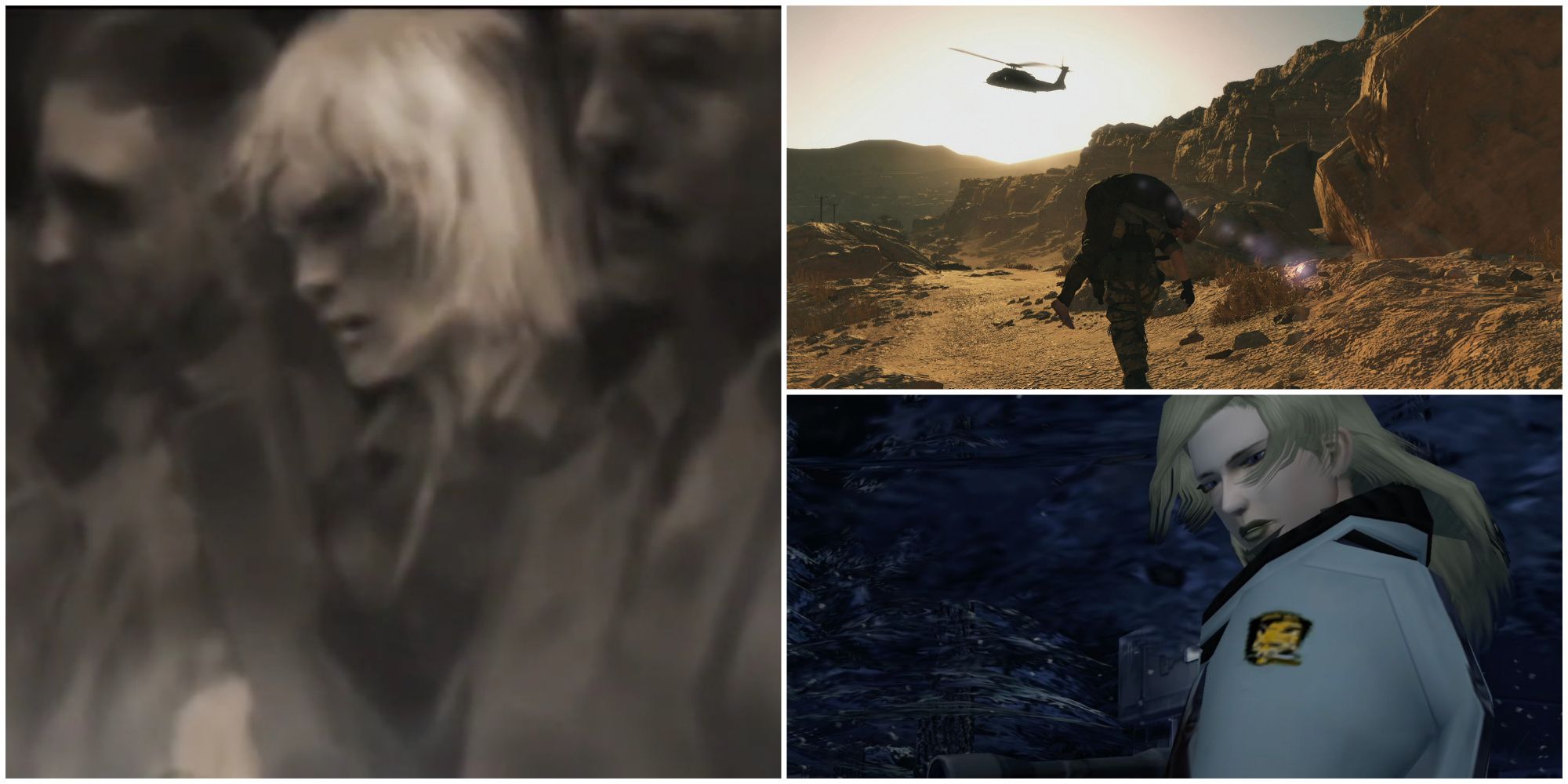
Saddam Hussein’s forces targeted the Kurds with artillery and air strikes, followed by chemical gas attacks. It was said to be a counter-measure against rebel groups, but it was also meant to reduce the Kurdish population to ‘Arabize’ the area. It was this campaign where Sniper Wolf, a Kurd herself, lost her parents, and in the aftermath was rescued by ‘Saladin’ (Big Boss).
12 The First Liberian Civil War
1989-1997, Liberia, West Africa

- Metal Gear Solid 2: Sons of Liberty
Big Boss rescuing Sniper Wolf as a child seems like altruism. But given that she grew up to be a deadly sharpshooter (and an annoying boss fight), he was being pragmatic. His goal in MG2 was to produce perpetual war by raising child soldiers as the next generation of fighters. Solidus, his perfect clone, did something similar to Raiden in the First Liberian Civil War. Born out of the totalitarian control of President Samuel Doe, this conflict saw four rebel movements fight for control of the country.

Related
10 Toughest Missions In The Metal Gear Franchise
These missions in the Metal Gear franchise tested players’ patience.
By the mid-1990s, the main contenders were the NPFL and the Armed Forces of Liberia (AFL). Solidus didn’t mention who his ‘Army of the Devil’ fought for. Just that he killed Raiden’s parents and raised him as his ‘Small Boy Unit’s leader. Both sides were notorious for conscripting child soldiers into their ranks, but the AFL was backed by the US. It’s likely Solidus was using Raiden to back their side of the conflict.
13 Force 21 Trials
1997, United States

- Metal Gear Solid 2: Sons of Liberty
Even after he was extracted from battle by an NGO, Raiden had trouble coming to terms with his past. This difficulty caught the Patriots’ attention. With cerebral implants and nanomachines, they suppressed his memories and groomed him back into the military, notably by putting him through MGS’s VR Missions and the Force 21 Trials. The latter is actually a real Linux-based communication platform that, as Pliskin says in MGS2, is about tactical IT deployment.
Known fully as Force 21 Battle Command Brigade and Below (FBCB2), it allowed commanders to keep track of their troops with virtual maps (overhead and from the ground) in real time. In other words, Raiden proved his worth in the army by making it easy to track and receive orders via a computer program. Fitting practice for his fieldwork, where a computer program would control him directly.
14 Internet Control And Surveillance
2000-Present, Worldwide

- Metal Gear Solid 2: Sons of Liberty
- Metal Gear Solid 4: Guns of the Patriots
People often consider the Patriots’ speech at the end of MGS2 as a prediction of the future, as some of its details fit what’s become of the internet. It’s a place where actual research and hard facts get glossed over by trivial data, misinformation, and anything else that makes people happy instead of what’s real. So, the AI used a convoluted plan involving two falsified terrorist incidents, an ex-child soldier, and an undersea fortress full of Metal Gears just to see if they could gaslight the world into following their “truth.”
In reality, there are plausible ways to control who and what’s on the internet. America’s Children’s Internet Protection Act (CIPA) and Kids Online Safety Act (KOSA) used the idea of keeping explicit content away from kids to control what counts as “explicit” (e.g. anything LGBTQ-related). Then the Patriot Act, enacted a few weeks before MGS2‘s release, permitted government organizations to collect data from people within and outside the US in the name of national security. It’s cheaper and more insidious than the Patriots’ plot, albeit less exciting too.
15 9/11 And The War On Terror
2001, United States

- Metal Gear Rising (officially)
- Metal Gear Solid 2: Sons of Liberty (unofficially)
9/11 is unique, as it’s perhaps the only event (thus far) to affect MGS in both lore and real life. In lore, it set off a protracted campaign against Iraq and Afghanistan, mirroring what happened in the real world. This produced a pro-military mood that Metal Gear Rising’s Sundowner wanted to go back to, and Senator Armstrong would use to “end war as a business.” In real life, the disaster happened shortly before MGS2 was due to be released in North America.
Considering that the game also ended with New York getting wrecked by a terrorist attack, Konami had to remove the most damaging parts of its finale. Some scenes, like a report on the Statue of Liberty, have resurfaced online over the years. However, the cutscene of Arsenal Gear plowing into Manhattan has yet to turn up. All that remains of it is an unused aerial model of Arsenal Gear in Manhattan post-crash.
7:28

More
Every Metal Gear Solid Game In Chronological Order (And The Year They Take Place In)
The Metal Gear Solid games span across decades, though not in chronological order. This should clear the timeline up.
