A great TV pilot has a difficult job. It needs to introduce characters viewers have never met, establish a world they don’t understand yet, and give audiences a reason to believe the story is worth following for weeks, months, or even years. More often than not, a pilot episode can literally make or break the success of a TV show.
In an ever-growing medium, there have been countless great first episodes of a TV show, but the very best of the bunch manage to approach their pilots in totally different ways. Whether they’re sparking a sprawling mystery, introducing an extraordinary character transformation, or essentially rewriting the rules of a TV series, the very best pilot episodes can grip viewers within minutes. Some TV shows improved after their first episode, but these seven were perfect from the get-go.
7
Atlanta Achieved So Much With So Little
Its First Episode, “The Big Bang,” Released in 2016

On paper, Atlanta’s premise is pretty straightforward. Broke and homeless, Princeton dropout Earnest “Earn” Marks struggles to support his young daughter and ex-partner Van, while his cousin Alfred gains traction as a rapper named “Paper Boi.” Earn sees an opportunity to improve both of their lives and pitches himself as Alfred’s talent manager, but after successfully getting Paper Boi’s track played on a local radio station, Earn joins Alfred in a parking lot, where a sudden verbal dispute escalates into a violent gun shooting.
With only 27 minutes to work with, Donald Glover and Hiro Murai’s Atlanta immediately showed just how subversive of a comedy it was. Earn’s desperate search for financial security makes poverty feel claustrophobic rather than quirky, contrasting the unglamorous reality of street-level survival against his cousin’s rising rap clout. “The Big Bang” spends far less time explaining its upcoming story and instead cleverly focuses on introducing its unique voice; Donald Glover’s dry comedy sits alongside uncomfortable conversations about race, class, and masculinity, while Hiro Murai’s direction gives even ordinary scenes a slightly surreal quality.
As a result, “The Big Bang” is a unique pilot episode. It doesn’t attempt to sell viewers on a big mystery or complicated premise, but rather, it simply tells audiences that they’re watching something they’ve never experienced before. Atlanta becomes more experimental as it carries on through its four seasons, but its pilot already contains an odd mix of comedy, drama, social commentary, and unpredictability that made the FX show so distinctive in the first place.
6
Chernobyl Knows How to Utilize Each of Its 5 Episodes
Its First Episode, “1:23:45,” Released in 2019

“1:23:45” begins with the Chernobyl disaster already looming over the characters before plunging viewers into the control room as the situation spirals out of control. During a late-night safety test, an explosion destroys the core of the Chernobyl Nuclear Power Plant, but management arrogantly dismisses the catastrophic scale of the disaster, insisting the core remains intact and reporting minor damage to superiors. Firefighters and workers are exposed to lethal radiation doses without proper equipment or warnings, while toxic smoke billows across the town of Pripyat. The HBO pilot’s horror comes from the fact that the characters don’t yet understand just how dangerous the situation is.
That makes Chernobyl’s first episode different from many other TV pilots: it doesn’t need a fictional mystery to create suspense because the audience already knows the disaster happened. “1:23:45” instead builds tension by showing just how many opportunities there were for people to recognize the danger and how often those concerns were dismissed. The result is an unusually effective example of a historical drama turning widely-known events into genuine horror.
Chernobyl’s performances, atmosphere, and realism were all widely praised throughout the miniseries’ run, but nowhere is that more evident than the show’s pilot. “1:23:45” was an engaging, harrowing, and powerful piece of television that transformed scientific failure into atmospheric horror by forcing viewers to witness the immediate, agonizing physical toll of the invisible fallout.
5
The Wire Explained Itself Perfectly
Its First Episode, “The Target,” Released in 2002
After D’Angelo Barksdale is acquitted of murder charges, Homicide Detective Jimmy McNulty bypasses his chain of command to inform Judge Phelan about the Barksdale drugs organization. That conversation becomes the beginning of a new investigation, but “The Target” is deliberately uninterested in turning the police into uncomplicated heroes. McNulty is talented but difficult, his superiors are too concerned with statistics and politics, and the department’s priorities frequently have little to do with solving crimes.
The pilot episode proved The Wire is no ordinary procedural. Instead of the typical “detective-gets-a-case” formula, The Wire’s first episode instead introduces the system that will constantly frustrate fans. The criminals are presented as far more than just faceless villains, which creates the foundation for the show’s unusually balanced perspective. The episode’s best work, though, is the way it avoids explaining Baltimore’s drug trade through exposition by allowing viewers to gradually work out how the different pieces fit together.
Compared with more explosive TV pilots, “The Target” can feel understated, but that restraint is the point. From the off, The Wire tells you how to watch it: pay attention, don’t expect simple heroes and villains, and understand that the institution itself may be as important as any single character. It’s a perfect thematic introduction that showed audiences just what they would be getting into.
4
Twin Peaks Was Revolutionary From Day One
Its First Episode, “Pilot,” Released in 1990

Laura Palmer’s murder provides Twin Peaks with its central mystery from its very first episode. After high school student Laura Palmer is found dead, wrapped in plastic along a riverbank, FBI Special Agent Dale Cooper arrives to assist, and Twin Peaks’ conventional mystery is over. Eccentric residents, oddly funny dialogue, unsettling music, and an increasingly dreamlike world all help Twin Peaks’ pilot episode prove itself as the surreal, genre-bending, revolutionary show it would become.
Perhaps “Pilot”‘s biggest achievement is how it successfully makes Twin Peaks’ tone the hook. Laura Palmer’s death is compelling, but David Lynch and Mark Frost manage to make audiences want to spend time in the show’s strange world. The slow tracking shots, long takes on weeping faces, the drone of industrial sawmills, and the eerie wind through the Douglas firs made Lynch’s revolutionary series completely unnerving. “Pilot”‘s 94-minute runtime and Lynch’s direction gave Twin Peaks an immediate cinematic quality, while the contrast between small-town imagery and disturbing secrets created the show’s trademark tension.
The rest of Twin Peaks would only solidify Lynch’s surrealist genius, but “Pilot” quickly confirms why that was possible in the first place. In its very first episode, the ABC series proved that audiences didn’t need to understand everything that happened in a pilot, because the need to understand this strange place was far stronger.
3
Lost Episode 1 Kept Us Invested For 6 Years
Its First Episode, “Pilot,” Released in 2004

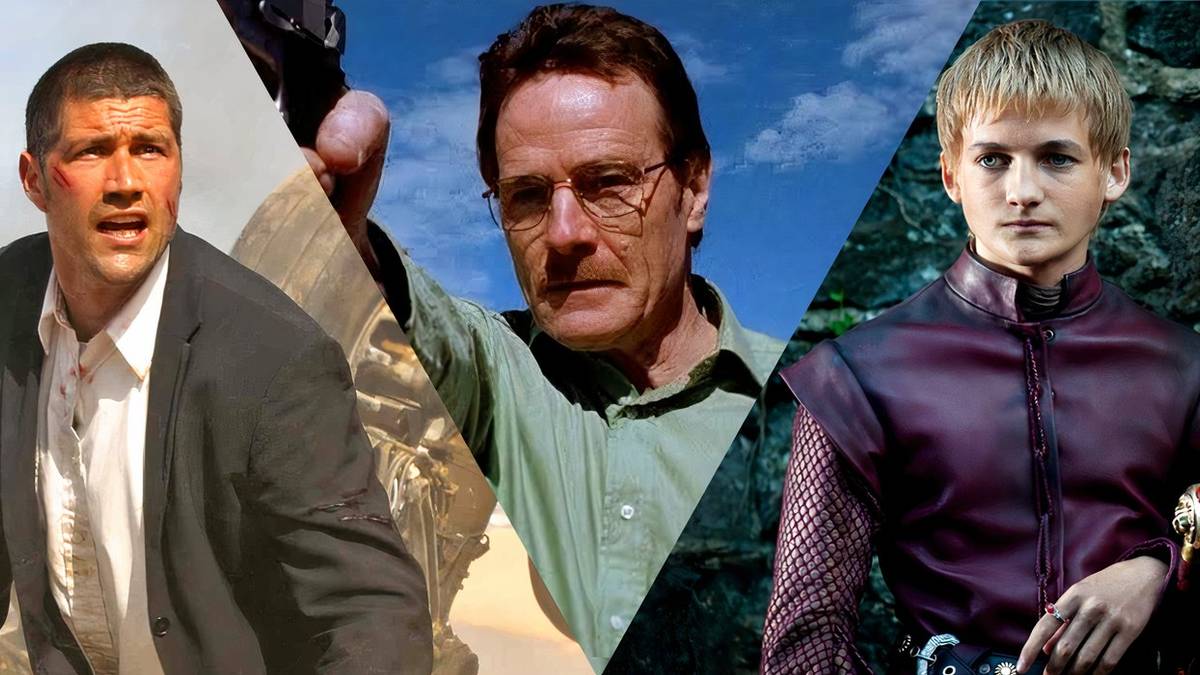
Lost‘s first episode begins when Oceanic Flight 815 from Sydney to LA crashes onto a mysterious tropical island. As Jack Shephard rallies survivors, tending to the injured amid burning wreckage, the castaways build a temporary camp and encounter frightening, unexplained phenomena: a massive unseen creature tearing through the jungle tree line. The episode introduces the basic survival situation, with a huge ensemble cast that includes Jack, Kate, Hurley, Charlie, Sayid, Locke, and Michael, while also utilizing flashbacks to further flesh out the survivors’ lives.
One of the most expensive pilots ever made at the time, Lost’s first episode had a tall task. It introduced numerous characters by placing them into a desperate, chaotic situation and set up several mysteries: What happened to the plane? Where are the survivors? What is the monster in the jungle? Lost later became iconic for its mythology, flashbacks, flash-forwards, and increasingly ambitious storytelling, but the pilot already contains its central formula: give audiences enough information to understand the world, but keep enough hidden that they have to come back.
Lost is a shining example of serialized television, and it was always evident from its first episode. With its sprawling ensemble cast, two timelines, and refusal to let audiences breathe, it’s truly no wonder the show became so successful after such an impressive first impression.
2
Breaking Bad’s Pilot Was a Masterclass in Character Exploration
Its First Episode, “Pilot,” Aired in 2008

High school chemistry teacher Walter White is struggling financially when he learns he has terminal lung cancer. Desperate to secure his family’s financial future, he blackmails his former student, Jesse Pinkman, into helping him manufacture pure methamphetamine in his RV. Their first deal turns violent when rival dealers attack them, forcing Walt to use his chemical expertise to poison the assailants and escape back to his suburban life. It’s one of Breaking Bad’s most iconic sequences and instantly established the entire engine of the show.
Walt has a reason to enter the criminal drug trade, Jesse is his connection to it, Hank represents the law that will eventually close in on him, and Walt’s intelligence is both his greatest advantage and one of the tools he uses to rationalize his recent immoral decision. “Pilot” also establishes Breaking Bad’s unusual ability to combine suspense, dark comedy, and tragedy.
The famous opening image of Walt driving his RV through the desert in his underwear might seem like a joke, but by the end of the pilot, it’s merely a glimpse of the character’s immense transformation ahead. Walt’s arc in Breaking Bad is one of the most compelling and brilliantly-executed transformations in TV history, and it works so well because of the pilot. The first episode tells fans exactly what Breaking Bad is about and what it plans to do with its central character.
1
Game of Thrones Had a Lot to Do to Introduce Fantasy Fans to Westeros
Its First Episode, “Winter is Coming,” Released in 2011

“Winter is Coming” introduces the Stark family and the world of Westeros after King Robert Baratheon travels to Winterfell to ask his loyal friend, Lord Eddard Stark, to become Hand of the King. Across the Narrow Sea, exiled princess Daenerys Targaryen is forced into a political marriage with Dothraki warlord Khal Drogo. The episode concludes back in Winterfell, where young Bran Stark stumbles upon Cersei Lannister and her brother Jaime in an incestuous relationship, and they push Bran from a high tower window. Game of Thrones’ first episode has an enormous amount of information to communicate, but it gradually reveals the political relationships, family histories, and supernatural threats that will drive the series.
George R. R Martin’s ASOIAF books are universally beloved, and “Winter is Coming” somehow made a monumental translation look relatively easy. Introducing a huge number of locations, characters, political alliances, and an entire fantasy mythology is no small feat, especially if HBO didn’t want “Winter is Coming” to feel like a glossary. Importantly, though, the Game of Thrones pilot successfully establishes that the characters’ lives are interconnected, even when they are thousands of miles apart.
That final scene, where Jaime and Cersei paralyzed Bran Stark, showed just how brutal and cruel the series was going to be, as it was completely unafraid to endanger its characters and overturn audiences’ assumptions. Game of Thrones‘ pilot was remarkable because it could introduce an enormous world and ask audiences to care while still showing them that nobody was safe.
