There’s niche gaming, and then there’s tactical RPG niche gaming. This subgenre is one of the most overlooked in the medium, not because it’s bad, overly complex, or obscure, but simply because it combines two genres in a that fans of either might shy away from. Character progression, branching narratives, and lengthy cutscenes? That’s not a strategy fan’s bag. Deep tactical combat, environmental and unit-based positioning, and multi-stage planning? RPG fans are just searching for the next story beat.
Because of this narrow audience focus, there are countless overlooked or outright forgotten tactical RPGs that very few people remember anymore, despite them being unsung masterpieces, and this list only highlights a handful of them. This subgenre dates back to the 90s, so some of these games have been overlooked for decades, while others are basically brand new and simply didn’t get the recognition they deserved.
7
Onimusha Tactics
Made For The Fans, Despite What The Fans Wanted


Onimusha Tactics

- Released
-
November 12, 2003
- ESRB
-
T // Mild Violence, Suggestive Themes
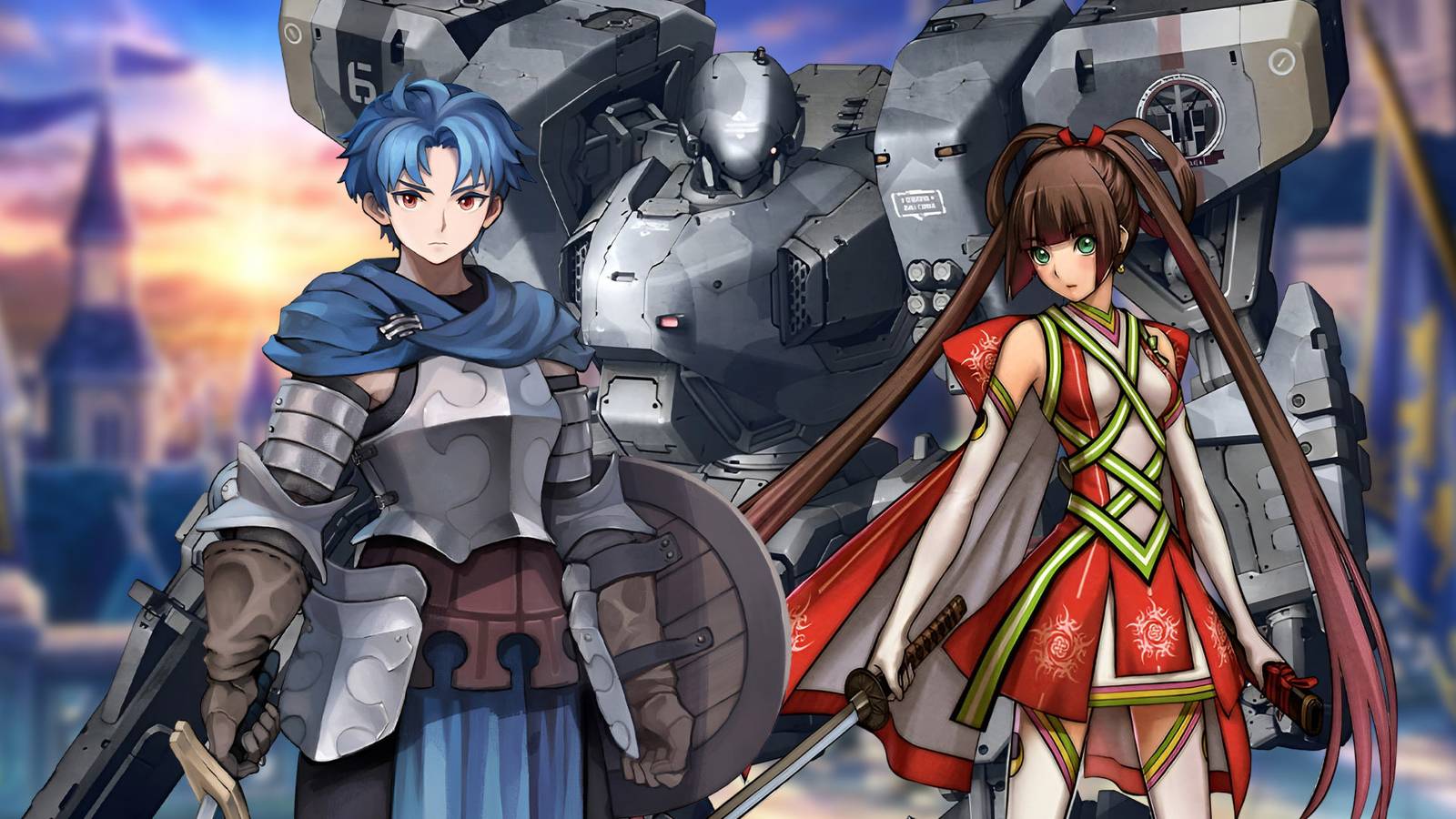
Back in 2003, when Capcom was a less sure-footed developer, it tried to branch out its semi-popular action horror series Onimusha into the tactics market. The result was Onimusha Tactics, a spin-off title (rather than a direct sequel) exclusive to the Game Boy Advance. This was actually the first Onimusha game to release for a Nintendo console.
Scratch & Peek

Identify the cover art while scratching off as little foil as
possible.
It might feel like Onimusha Tactics has a bit of an identity crisis, but it really just had a very niche appeal. It’s not a complex tactics game, so it’s more suited to gamers coming from the mainline Onimusha series and craving more of the same. Strategy vets won’t get much out of it. However, that’s not exactly a surefire selling point, because odds are Onimusha fans just wanted more . . .well, Onimusha, with all its action and horror elements. However, after the success of Onimusha: Way of the Sword, it’s maybe the best time in history to go back and check out this tactics spin-off. You’ll get a brand-new take on the series’ lore and setting without struggling through a 20-year-old version of one of the best combat systems in gaming.
6
God Wars: Future Past
Lumpy 3D Visuals Hide A Stunning Old-School Tactics Game

There’s really only one reason why God Wars: Future Past isn’t more popular: it looks like you’re controlling a bunch of Funkos. The 3D visuals aren’t bad in the traditional sense, but they’re very hard to connect with. Conversely, the 2D character portraits that show up during dialogue scenes and cinematics are gorgeous, so there’s a major contrast in that regard, and the characters themselves are lively and well-written.
That said, at the end of the day, a game needs to be judged on its gameplay, and God Wars: Future Past nails that aspect. It’s an old-school tactics game, so the pacing is pretty slow to start, but that’s just its way of getting you up to speed. Combat employs the classic tactics elements of positioning bonuses and character speed affecting turn order, but layers it with an Impurity system that lets you control which character enemies are likeliest to target. Meanwhile, character progression is dictated by a deep Job system, with each character able to fill three Job roles (including one role unique to them), each with their own skill tree for maximum customization potential.
5
Growlanser 4: Wayfarer Of Time
The Perfect Standalone Entry Point To An Overlooked Series

|
Platforms |
PlayStation 2, PlayStation Portable |
|---|---|
|
Released |
August 18, 2011 |
|
Developer |
Career Soft |
|
Genre |
Tactical RPG |
It’s pretty wild that a series as prolific as Growlanser also has basically no name recognition in the West, even among tactics RPG fans. The series’ calling card is a distinct real-time turn-based hybrid. Combat takes place directly on the overworld map, as opposed to on a grid, with characters allowed to move freely into position, while spells have a set range and a delay before they fire. However, there is a pause option for you to adjust tactics mid-fight. The series is known for being exceptionally difficult, pitting you against massive squads of enemies who use the environment to disguise their numbers.
Narratively, the stories typically feature complex themes about politics, religion, and war, none of which are uncommon for the genre, but they’re handled well. The branching narratives are very interesting, with choices often being morally gray and not necessarily indicating what their consequences will be. There are six games in the series, but Growlanser 4: Wayfarer of Time is an excellent starting point. It’s a standalone entry, meaning no prior knowledge is needed to understand the story, but it captures everything that fans of this series love so much.
4
Vanguard Bandits
Polishing Genre Standards To A Shine

Vanguard Bandits released amongst a slew of other RPGs in 1998, and unfortunately fell through the cracks as a result. This is the same release year as Final Fantasy Tactics, Breath of Fire 3, Star Ocean: The Second Story, Parasite Eve, and most notably, Pokemon Red & Blue, all in the RPG space. It’s no wonder that some great games were overlooked as a result. That said, this is a game that’s worth revisiting, as it plays with some interesting tactical RPG ideas that haven’t really been replicated.
This is a mecha and medieval fantasy story in a similar vein to the recent Chained Echoes or the anime The Vision of Escaflowne, which is an immediate selling point for some. The two main twists it puts on the tactics genre are Fatigue Points (FP) and counterattacking. Fatigue Points build up during combat when you take actions, and can freeze characters for a turn if they climb too high, which forces you to use your entire roster for almost every fight. Meanwhile, any enemy attack can be countered with a dodge, block, or an attack of your own (at the cost of a major FP increase). There are a ton of customization options for your characters, and a branching storyline with five distinct endings over three distinct narrative branches. Best of all, Vanguard Bandits has an excellent English translation available that is praised for preserving the tone and character of the game across languages.
3
Front Mission 3
A Flawed Masterpiece

Another mecha-based tactics RPG that was overlooked in the late 90s, Front Mission 3 has effectively achieved cult classic status. This is basically Armored Core with strategy gameplay. The degree of mech (or Wanzer) customization is extensive, allowing for a range of playstyles, builds, and approaches to each encounter. The part-damaging mechanic, in particular, is very cool (there’s nothing like blowing off an enemy mech’s legs and leaving it helpless). There is also a branching storyline dictated by a surprisingly innocent early-game choice, and a robust in-game internet simulation that adds a ton of world-building detail.
Here’s the catch. Front Mission 3 received a wholesale remake that was released in 2025. It’s . . .a terrible remake. It’s fair that a modern remake of a cult classic game from the 90s won’t get top-shelf funding, but this version is overloaded with generative AI for the 2D artwork and sprites that causes the visual elements to be inconsistent and strange at best, and downright unrecognizable at worst. One main character portrait doesn’t have a nose, for example. It’s also a technical mess, particularly on the audio side. The soundtrack has been updated to modern standards, but the sound effects have not, and hearing background noise from the PS1 emanating from a PS5 is jarring. It’s best to just go back and play the original if you want to experience what made Front Mission 3 a cult classic.
2
Vandal Hearts 2
A Steep Learning Curve Designed To Fascinate Strategy Veterans

Vandal Hearts 2 was divisive in 1999, and it remains so today. However, long-time strategy fans who haven’t played it owe it to themselves to at least take it for a spin. For one, these games are heavy, even by old-school RPG standards. Themes of civil war, class struggle, and betrayal are introduced from the outset and aren’t shied away from or sugar-coated. It’s an ugly game, not so much visually, but in its subject matter.
Then there’s the gameplay, which was divisive even for fans of the first game. Vandal Hearts 2 introduced a system called Dual-Turn combat, a mechanic akin to Active Time battles in Final Fantasy 4, but more unpredictable. Essentially, instead of the player and AI taking turns, each party can move one unit per turn, but they move simultaneously. That means, instead of reacting to what the last unit did or preparing for the next unit’s turn, you’re predicting moves based on intuition and game knowledge. Because of this, Vandal Hearts 2 is particularly suited to experienced tactical RPG players, those who want their games to push back and even surprise them. It’s these players who swear by Vandal Hearts 2, and rank it as one of the best games in the genre.
1
Unicorn Overlord
Yet Another Criminally Overlooked Vanillaware Game

Despite churning out unsung masterpieces for almost two decades now (longer if you go back to before its name change) Vanillaware games remain criminally overlooked. As an avowed 13 Sentinels: Aegis Rim fan (it was the first game I wrote about for GameRant), I’m used to it, but I really did think that the brilliance of Unicorn Overlord would be the catalyst for a long-overdue breakthrough. Unfortunately, despite selling 1 million units in its launch year, this is just another game in the pile of forgotten Vanillaware projects that I’ll take every opportunity to recommend.
First off, just look at the art style. Vanillaware’s penchant for using hand-drawn 2D art is one of the studio’s calling cards, but it has never looked better than in Unicorn Overlord. It is, frankly, one of the best-looking tactical RPGs ever made. The game features over 60 fully-voiced characters, each one sporting a unique visual design to go along with personal questlines. Instead of embarking on missions that lead to combat through a menu, you explore an open-world, featuring not just combat scenarios but side quests, town-building mechanics, and secrets. There’s a branching narrative, a gorgeous soundtrack, and deep tactical options that grow exponentially as you progress. If my gushing hasn’t sold you yet, there’s also a free demo that covers the game’s first eight hours, a pretty generous offering that shows Vanillaware’s confidence in its product. I know there are six other games on this list, but the one I think everyone who reads this absolutely needs to play is Unicorn Overlord.
