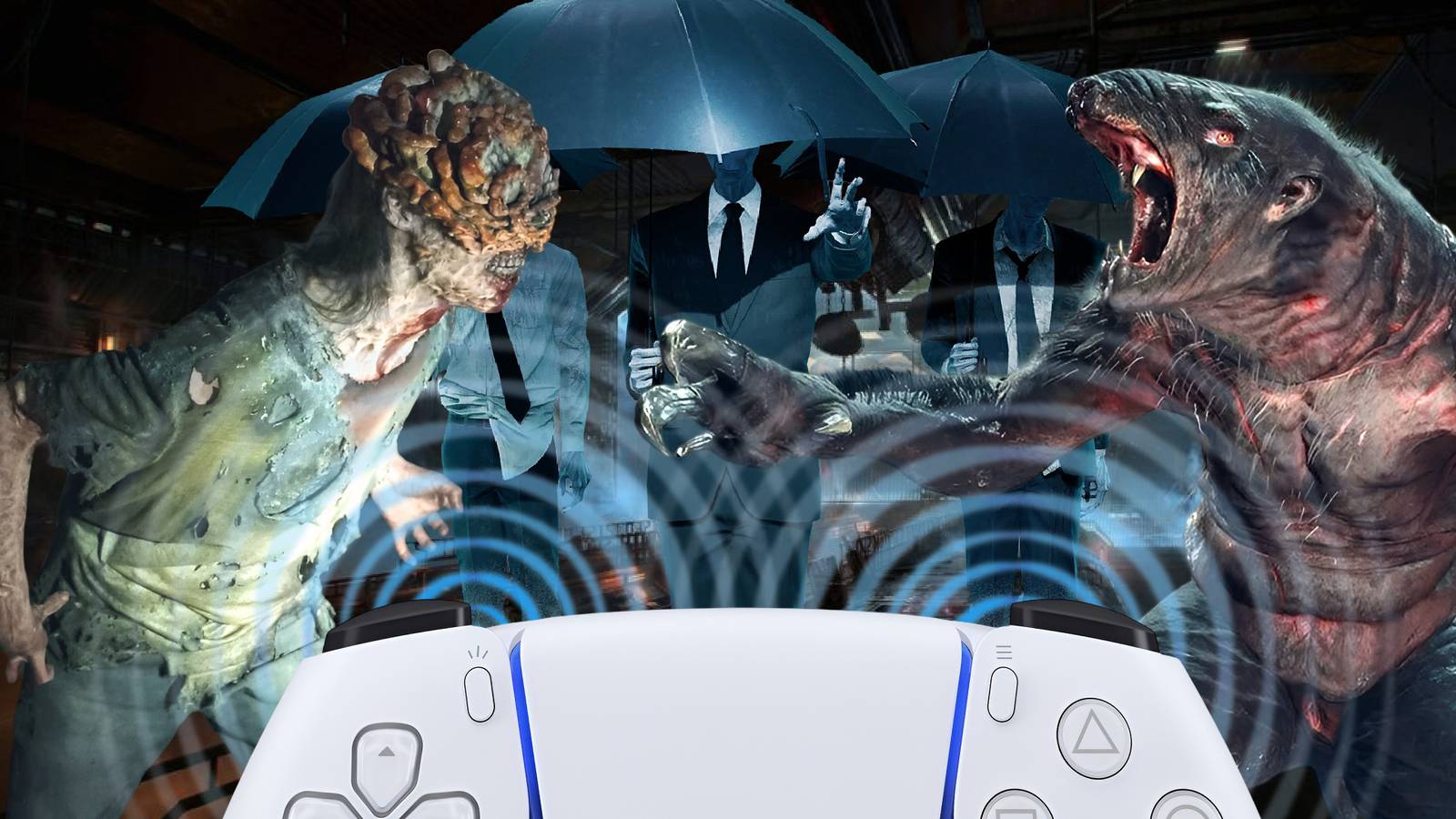
Immersion is a very important part of any great video game, but in the world of horror, those small extra details can go a long way to making the whole experience even scarier. This can be achieved through a variety of methods, from audio design to lighting, yet some games go a step further by using the technology of the player’s own controller to amplify the terror in incredibly unique ways.

Horror Games That Use Players’ Microphones
Using the player’s microphone in gameplay is an excellent way to increase immersion and tension in horror games. Here’s which titles did it the best.
When it comes to the PS5, the DualSense controllers have a unique kind of vibration technology called haptic feedback that replaces traditional rumble, adding more precise and nuanced sensations to better replicate certain in-game textures and effects. Using this in a horror setting allows developers to shape the feel of every action, whether it’s the pull of a trigger or simply the player’s movement through a space, infusing the gameplay with additional feedback to keep the tension high and heart rates even higher.

Rearrange the covers into the correct US release order.
Rearrange the covers into the correct US release order.
Easy (5)Medium (7)Hard (10)
10
The Last Of Us Part 1+2
Feeling The Violence
- Adaptive triggers reinforce desperation and exhaustion
- Haptics intensify the emotional tension
The Last of Us series is one of the best showcases of how effective the DualSense technology can be. The violence is made to feel uncomfortably physical thanks to the added trigger resistance, which changes depending on the weapons in use, while subtle vibrations simulate environmental details, heightening the sensation of anything from breathing to the impact of a physical blow.
What makes this implementation effective is restraint. Haptics are rarely exaggerated, instead creating a constant low-level tension that reinforces each game’s oppressive atmosphere. Rather than simply enhancing immersion, the controller becomes an integral part of the experience, ensuring that the emotional impact lands much harder than on previous-gen consoles.
9
Dead Space Remake
Every Corner, A New Surprise
- Vibrations mimic machinery and heartbeats
- Physical strain is added to the combat
Dead Space transforms the PS5’s DualSense controller into an extension of the USG Ishimura itself. Mechanical vibrations pulse through the device during tram rides, reactor sequences, and environmental system failures, making the ship feel alive in a deeply unsettling way that you can never truly escape.
10 Horror Games That Are Actually Scary
Unbelievably scary and disturbing, these horror games are going to be hard to finish, even for seasoned fans of the genre.
The combat benefits equally from the technology, letting the industrial nature of Isaac’s weapons exist in the virtual world with every shot, while his deteriorating condition is reflected through an increasingly aggressive feedback loop over the course of the entire playthrough. The result is a horror experience where tension is communicated physically, not just visually, and small moments of comfort are quickly broken by the sheer intensity of the controller’s motion.
8
Alan Wake 2
A True Psychological Nightmare
- Highlights shifts between realities
- Environmental feedback destabilizes the player
Alan Wake 2 blurs the line between the physical and psychological realms, both in actual gameplay and through its use of modern controller tech. Sounds and sensations are directly transferred to tactile changes in the controller, and even in the quietest moments, there is always a faint murmur that breaks up the otherwise still environment.
This becomes especially effective during transitions between realities, as the vibrations subtly shift in intensity and rhythm, reinforcing the sensation that the world itself is changing. The controller stops functioning as a passive piece of hardware and becomes a tool to manipulate the player’s perception and uproot the fabric between the real and supernatural worlds.
7
Control
Power That Transcends The Screen
- Layered haptics bring powers to life
- Weight is felt behind every attack
Games with supernatural elements are the perfect place to showcase haptics, and Control does an excellent job of reinforcing the unnatural qualities of the Oldest House. The DualSense reacts not only to combat encounters but to the building’s shifting architecture and environmental anomalies, creating a sense of instability that extends far beyond the game’s confines.
Yet in terms of actual gameplay, abilities still manage to use distinct feedback patterns to give individual throws and weapons a tangible and separate sensation from one another. Despite how surreal the world is, this emphasis on physicality adds tangibility to the playthrough, grounding the action and scenes no matter how outlandish they may get.
6
Returnal
Pure Sensory Overload
- Weapons function differently thanks to adaptive triggers
- Environmental effects add constant tactical pressure
Returnal remains one of the strongest showcases for the DualSense tech. Not only does it make use of the adaptive triggers for a more responsive gameplay feel, but it also brings a level of immersion that heightens the game’s otherwise less intensive horror elements. When firing off rounds, players can alternate fire modes through partial trigger pulls, without needing to press an additional button. Suddenly, the fast and fluid loop becomes even more engaging through a very simple added extra.

8 Best Horror Games Where You Are The ‘Final Girl’ (Inc. Resident Evil Requiem)
“Final Girls” are a big part of the horror genre, and video games are no different. In some cases, players become the ultimate final girl.
More importantly, haptics create a relentless sensory cycle that constantly coats players in weather and activity, turning simple sci-fi settings into ones filled with suspense and hostility. Also, by mirroring the psychological side of the narrative, the controller acts as an emotional booster, raising the psychological response in the player through vibrations and minor physical changes.
5
Metro Exodus
Atmospheric Tension On Another Level
- Isolation and decay are reinforced through physical feedback
- Weapon handling gains additional physicality
Metro Exodus is atmosphere incarnate, and to amplify the oppressive nature of the world even further, it uses the DualSense in a more subtle way than most other horror games. Trigger resistance changes between improvised weapons, shifting how combat feels right from the get-go. Environmental effects, like the storms and distant train sounds, add texture to the exploration that is restrained but still manages to fit the tone of the experience.
A survival-adventure game at heart, every step taken comes with added stress that already existed thanks to the stellar audio design. Only now, those feelings are glued to the player’s hands all the way through. Rather than overwhelming the player with constant jitters and explosions, the haptics quietly support immersion and tension, playing into the more methodical and slow gameplay style that so many have come to adore from this series.
4
Ghostwire: Tokyo
Persistent Paranormal Presence
- Spiritual energy is channeled into the player’s hands
- Subtle vibrations indicate environmental anomalies
Ghostwire: Tokyo manages to make Tokyo feel haunted even when nothing is happening. DualSense vibrations react to spiritual energies, environmental anomalies, and nearby threats, creating constant low-level unease that transitions into action in seconds.
Combat also benefits from a layered approach to the haptics, with different vibration patterns and resistances depending on which elemental attack is being used at any time. In many ways, the controller acts as a marker for danger, reacting to invisible threats long before the player encounters them and turning simplistic walks through the city into perilous treks into the unknown.
3
Resident Evil Requiem
Experience The Fear
- Hesitation and shakiness are felt through the triggers
- Eerie moments are amplified through vibrations
Survival horror wouldn’t be the same without Resident Evil, and Requiem is the perfect example of why the franchise has remained the king of the genre for so long. Grace is terrified from the moment the game begins, and players really feel that fear through the controller, with the small hesitations and breaths building tension, even in moments without a present danger.
This idea closely aligns with the core philosophy of survival horror itself. Instead of only reacting to combat, the controller also contributes to pacing and uncertainty, making exploration as much of a threat as any zombie. Regardless of whether players are opting for the full fear factor in first-person or the more laid-back third-person approach, the psychological impact will come straight through the screen and echo all the way through the player’s body.
2
The Callisto Protocol
Plenty Of Room For More Sci-Fi Horror
- Heavy vibrations emphasize physical damage
- Claustrophobic combat is made all the more intense
The Callisto Protocol focuses on physical brutality, leaning heavily into the body horror side of the genre and paying homage to all things sci-fi. Melee attacks, hazards, and enemy encounters all produce dense, forceful feedback that emphasizes the violence of each interaction. Where normally a basic controller would just shake about, the DualSense adjusts according to the exact weight and strain of each action.
Like many other sci-fi horror games, claustrophobia is a big part of the experience, and the constant low hum of machines, both audibly and through vibrations, only serves to make that sensation even more oppressive. The horror becomes a physical communication as opposed to merely something to be observed, removing the gap between the player and the action occurring before their eyes.
1
The Dark Pictures Anthology: House Of Ashes
Scares On A Cinematic Scale
- Quieter moments are turned into suspenseful stretches of gameplay
- Environmental cues warn of danger
The Dark Pictures Anthology: House of Ashes brings a cinematic element to horror, replacing constant cheap scares with an overarching theme of fear that only becomes more oppressive as time goes on. The quiet scenes often feature faint vibrations tied to movement, and without actually showing the player what comes next, there is already a sense of unease.
Because the game emphasizes decision-making and suspense over constant combat, the controller’s feedback perfectly aligns with the right moments, instead of jolting all over the place with every random occurrence. Small tactile cues build that anticipation, reinforcing the feeling that danger is always close, regardless of whether the player is engaged in conversations or shrouded in silence.

8 Must-Play Horror Games, Ranked
With so many iconic horror games across the decades, we’ve selected some of the most important that prove as a must-play for every horror fan.
