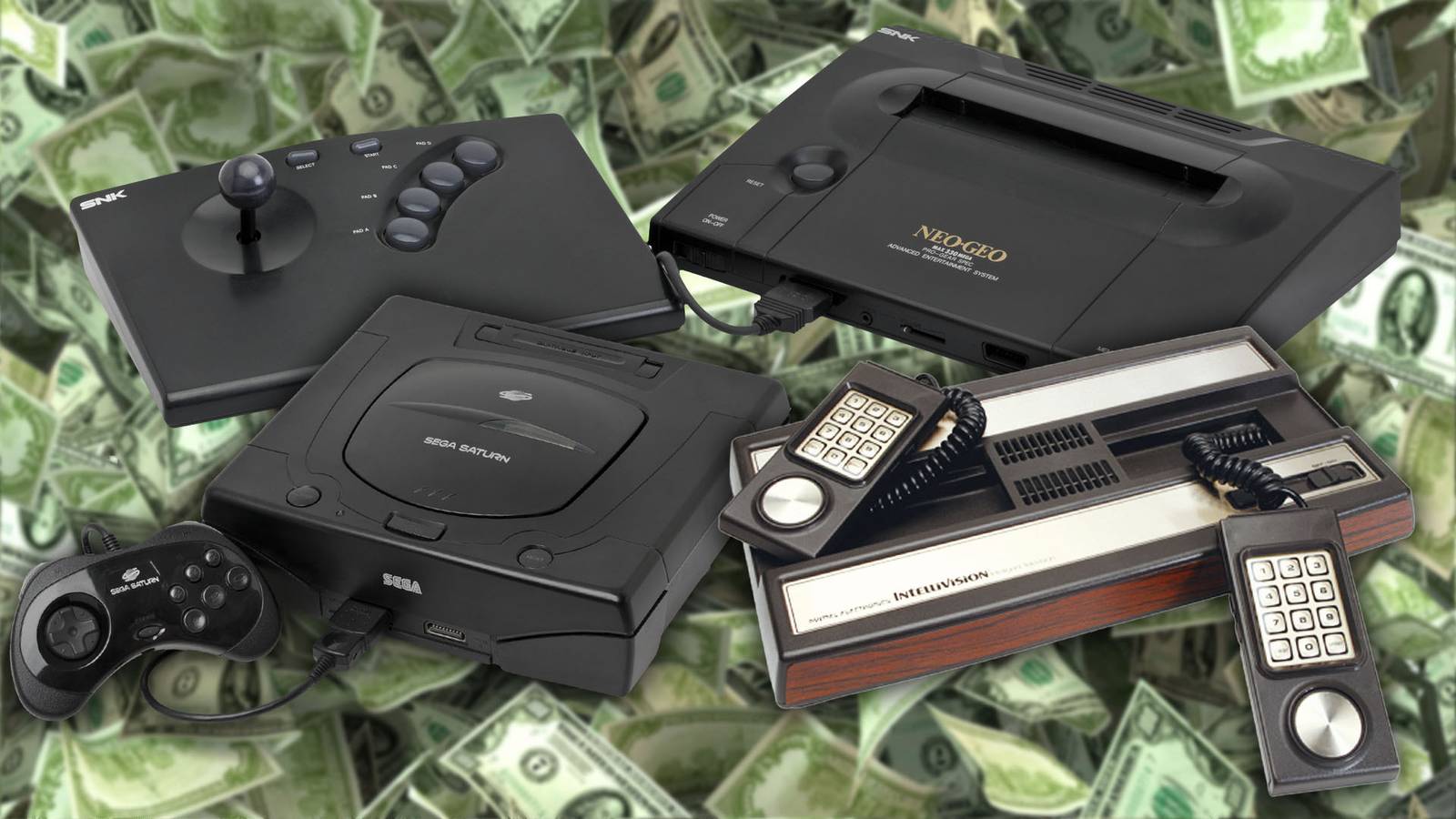
The pricing of video games and their respective consoles has been an increasingly hot topic of debate over the past few years, and recently, it's the PlayStation that has found itself in hot water. Despite the console being six years old, and the next generation rumored to be around the corner, the decision was made to increase the price of each version with the base model now sitting at $650.

It's official: console gaming just got a lot more expensive
Console gaming used to be accessible to most people, but with the onset of modern systems, it now feels like a bank-breaking luxury.
The numbers themselves may seem pretty big, but as it turns out, gaming has very expensive periods, especially in the early days of the industry. That being said, these new prices still have many fans worried about what's next, as it looks like the gaming cost ceiling can only go up from here, and the once-semi-accessible hobby seems more out of reach than ever.
9 Match the games to the grid.
get started
PlayStation 3
Even more expensive later

Details:
-
Starting price: $599 (2006)
-
Inflation-adjusted: ~$970
The PlayStation 3 is fairly new to the console world, but that doesn't mean it was any cheaper for buyers at launch. A large reason for the high price of the device was due to its hardware, since the console was equipped with many cutting-edge technologies such as a Blu-ray disc drive and a complex cell processor that significantly increased production and, consequently, real consumer costs. Launched with state-of-the-art technology including Blu-ray drives and sophisticated cell processors.
Sony framed the price judiciously, emphasizing its role as both a gaming system and a next-generation media hub that can be used for a multitude of different activities. Public reception was quite mixed, as despite some forward-thinking hardware, the price created a barrier to entry, especially compared to competitors, and today, it stands as a reminder that the PlayStation is not entirely new to the world of expensive devices.
Sega Saturn
Far from competitively priced

Details:
-
Starting price: $399 (1995)
-
Inflation-adjusted: ~$830
The Sega Saturn's architecture made it powerful for 2D games but significantly harder to develop for, and as the market moved towards more 3D experiences, the device struggled to show any major advantages. A surprise launch and high price compounded these problems, with initial acceptance limited to a small number of consumers who were able to afford a vertical entry point.

10 classic game consoles that are basically useless bricks today
From the Advanced Game Player to the Commodore 64 Games System, these classic consoles are now mere relics of gaming's past.
How competitive the market was, especially from big names like Sony, who had just launched a cheaper, more developer-friendly option. Despite some strong arcade-style titles, the Saturn's price and complexity ultimately contributed to its decline in the market, and it now exists as a footnote rather than a leader in the industry.
Xbox One
All-in-one entertainment device

Details:
-
Starting price: $499 (2013)
-
Inflation-adjusted: ~$700
The Xbox One era of gaming was the first time in many years that Microsoft really started to lose ground to the PlayStation, and part of that was its higher initial price point. Thanks to the $100 more expensive Kinect, the console was intended to act as a central media device, integrating voice control with TV, apps, and gaming, but this approach drove up costs without directly benefiting its primary demographic.
Due to the product's wide range, reception was critical, with many viewing the Kinect's forced inclusion as unnecessary, especially when compared to the cheaper PlayStation 4. Microsoft later adjusted its strategy, but the damage was already done, and all that initial momentum never picked up again.
Atari 5200
Bringing the arcades home

Details:
-
Starting price: $269 (1982)
-
Inflation-adjusted: ~$915
The Atari 5200 aimed to bring arcade-quality gaming to the home, but it demanded a huge premium to achieve that goal. Technically impressive for its time, it fulfilled the promise it set out to achieve, yet the lack of compelling specialty titles made it difficult for the public to get behind.
Most consumers found it hard to justify the cost, especially when alternatives offered more established libraries that could give them more bang for their buck straight out of the box. Despite its potential, the system failed to keep pace, highlighting the importance of a decent library of games as justification for major hardware investment.
Intellivision
Premium hardware means premium price

Details:
-
Starting price: $299 (1979)
-
Inflation-adjusted: ~$1350
The Intellivision positioned itself as a high-end alternative to early consoles, emphasizing improved visuals and more complex gameplay that set it apart from the rest of the crowd. Its pricing reflects this premium branding, which targets consumers seeking a more advanced experience not present in the rest of the market.

The best PS5 exclusives for different types of players
If you're looking for another game to explore on your PlayStation 5, this list has you covered.
Moderately successful at the time, it found a niche at the high end of the market for those looking to experience the best the gaming world has to offer. The same can be said for today's more premium consoles, but now, the lower end is starting to move in a more expensive direction, which has many lower-end consumers worried about the future of the industry.
neo geo
Hardly consumer friendly

Details:
-
Starting Price: $649 (1990)
-
Inflation-adjusted: ~$1625
The Neo Geo was effectively an arcade machine for the home, bringing near-cabinet experiences to the user's home. Like many other consoles that were all striving for the same goal, the reality was that it was an expensive device that far exceeded the expectations of the average consumer, and the games themselves were also very expensive, making it a very wallet-demanding purchase decision.
In many ways, the console existed as a luxury product rather than a mainstream platform, allowing it to become a respected device in the space, but not to dominate the market. If consumers could afford it, then there was no better place for gaming, but for those who couldn't, there were still many great devices available, such as the SNES and Game Boy.
Philips CD-i
More than just a console

Details:
-
Starting Price: $1000 (1991)
-
Inflation-adjusted: ~$2400
The Philips CD-i was built as a multimedia device supporting video games, educational software and video playback, all within one complete package. A desirable product for many, the extensive functionality drove its price to astronomical levels, and in the process, weakened its focus as a gaming platform.
Consumers were unsure of its purpose, as it was difficult to justify a purchase as a console alone, and the same could be said for its existence as a video device. Without a strong library of compelling games, the high cost felt out of the realm of reason, and its failure illustrates the risks of prioritizing versatility over a clear, focused identity, which has become more relevant than ever in the gaming world.
3DO Interactive Multiplayer
Marketed with a premium

Details:
-
Starting price: $699 (1993)
-
Inflation-adjusted: ~$1580
3DO Interactive Multiplayer introduced an unconventional business model, allowing manufacturers to produce hardware while 3DO collected licensing fees. The approach sounded interesting on paper, and there were some early adopters who seemed completely on board with the idea, but the biggest fallout fell on consumers, who were stuck with a remarkably high entry point that offered them nothing particularly exciting to enjoy.
The console was one of the first devices to show the potential of CD-based gaming, but even then, as with innovation, the early bird doesn't always get the bug. But, as a gaming console first and foremost, the high entry price tag and lack of specific titles made it far from an attractive purchase, even for those interested in new technology.

The best PS5 games that can run in 4K and 60 FPS
PlayStation 5 is a powerful console but not every game takes advantage of it. Which titles run at 4K and 60 fps?
