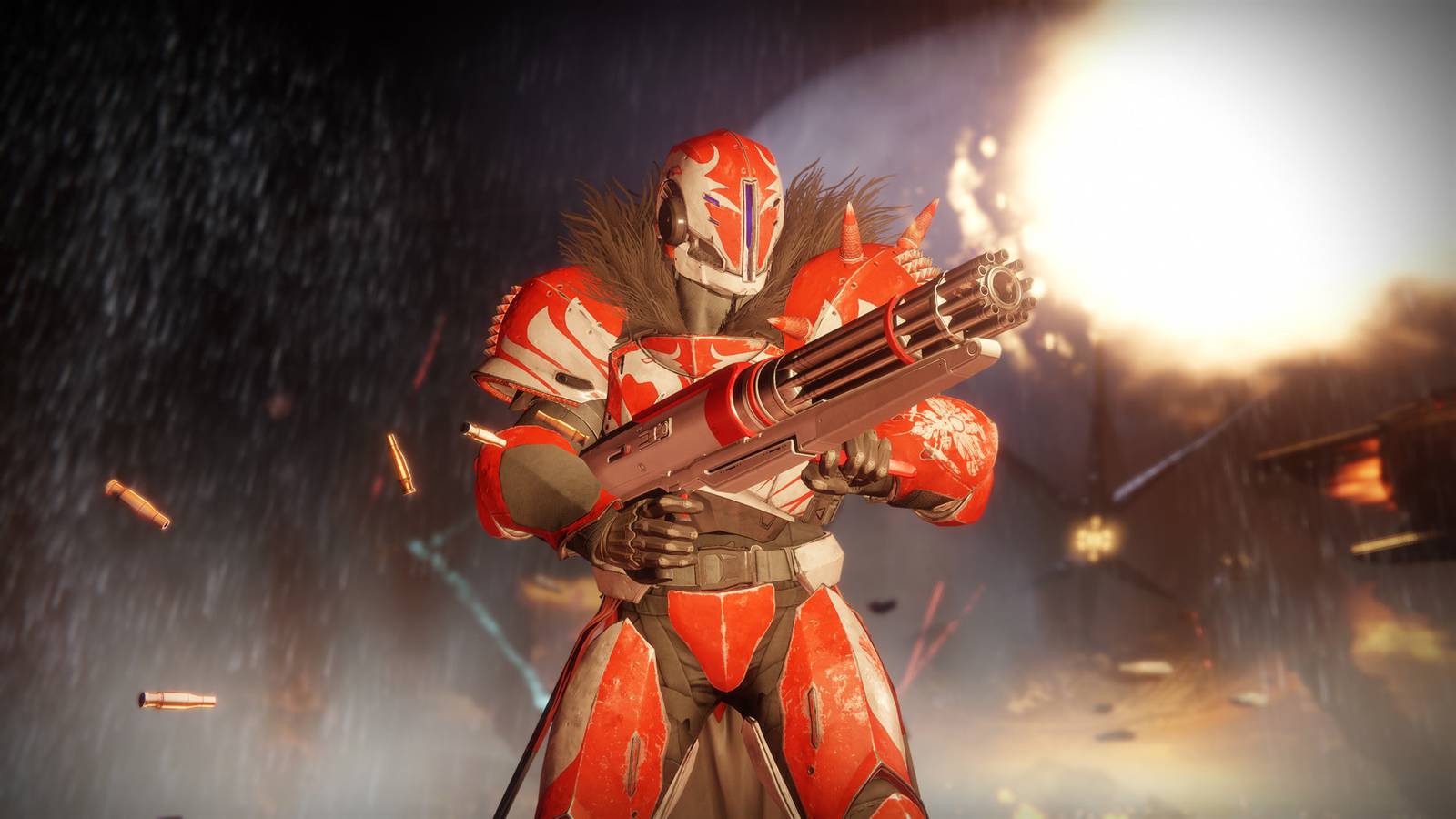
Live-service games are inherently risky. The expectation is that they maintain a 'forever' playerbase that continues to funnel money into the developer, or, more realistically, into the publisher's pocket, as that playerbase grows every year. Even successful ones, like Fortnite, are not flawless, as we saw with the recent Epic Games layoffs.
So, when a studio builds itself entirely around a live-service game, what happens when it collapses? That question has been looming over Bungie's head this week, with Destiny 2 finally sunsetting, and reports suggesting that Destiny 3 may not even be moving forward. Now everything depends on Marathon, the studio's new live-service extraction shooter.
As reported by GamesRadar+ , Valve veteran Chet Faliszek, one of the writers behind Left 4 Dead and Portal, is one of many to express concern about the future of the studio. “Are we seeing the end of Bungie?” he asked in the new video. “I say that not celebrating and screaming 'dead game' or anything, but just super bombed out. Because Destiny 2 closing on June 9 means they don't need as many people to keep Destiny 2 going, and they're not doing Destiny 3.”
In fact, reports suggest that Bungie is now bracing for layoffs.
“The marathon was a big bet and it didn't hit,” he continued. “Sony buying Bungie for their multiplayer games… I don't think Sony cares anymore, do they?”
Studios want games that last forever, and Destiny 2 proved that the series isn't immortal.
PlayStation announced its intention to enter the live-service space in 2022, with plans to launch ten live-service games by 2026, after acquiring Bungie for $3.6 billion. Most of them are not out. Concord faced such a dismal launch that it was pulled from sale after just two weeks, while The Last of Us' standalone Factions game, the new live-service Twisted Metal, PlayStation London's unannounced triple-A fantasy game, and Spider-Man: The Great Web were canceled entirely, to name just a few.
The marathon is not only important to Bungie's future, but PlayStation's direct service efforts. But with Sony reportedly considering Destiny 3 too expensive to greenlight, it's clear that faith is wavering. As Faliszek explains, publishers want to invest in live-service games like Counter-Strike that continue to dominate the Steam charts decades after being on the market. He said, 'Counter strike has been going on since 1997. “These games, once they find an audience, can live forever, and these publishers are following.”
Destiny 2 proved that IP isn't indestructible, which is why Sony is hesitant to continue with sequels or any other closely related projects. This leaves Bungie with Marathon, which has already failed to live up to expectations. In other words, Sony spent billions to acquire the studio that helped Xbox with Halo in its live-services push, and is now left with a niche extraction shooter. It's hard to blame Faliszek for being worried.

- issued
-
August 28, 2017
- ESRB
-
T for TEEN for blood, language, and violence
- Engine
-
Tiger Engine
- Multiplayer
-
Online multiplayer, online co-op
- Cross-platform play
-
PC, PS4, PS5, Xbox One and Xbox Series X|S